
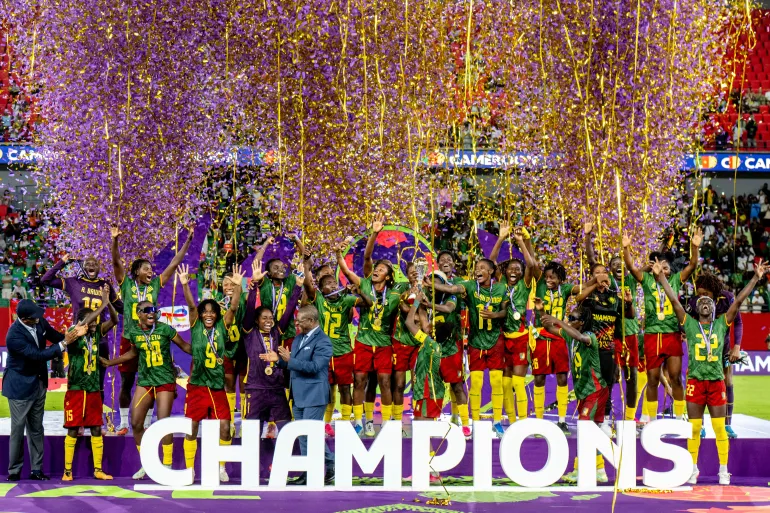
Cameroon have won the 2026 Women’s Africa Cup of Nations (WAFCON) after defeating tournament debutants Malawi 3-0 in the final at the Moulay Hassan Stadium in Rabat, Morocco.
The victory marks a major milestone for the Indomitable Lionesses, who had reached the WAFCON final three times before but lost on each occasion. Their previous defeats came against Nigeria in 2004, 2014 and 2016.
This time, Cameroon made no mistake, producing a dominant first-half display to put the title beyond Malawi’s reach before the break.
Marie Ngah Manga opened the scoring in the 20th minute, reacting quickest after Naomi Eto’s cross and a rebound from the Malawi defence created an opportunity inside the box. Cameroon doubled their advantage 10 minutes later when Eto produced a superb finish to put the Indomitable Lionesses firmly in control.
Ngah Manga then completed her brace in first-half stoppage time after Eto got past Malawi goalkeeper Mercy Sikelo and delivered the ball for the striker to finish from close range.
Read: Malawi, Cameroon Set for WAFCON Final After Historic Semifinal Wins
Cameroon’s Defence Stands Firm
Malawi entered the final with plenty of attacking confidence after an impressive run to their first WAFCON final. Much of their success had been driven by sisters Tabitha and Temwa Chawinga, who had played key roles in the Scorchers’ historic campaign.
However, Cameroon’s defence successfully contained the sisters throughout the final and limited Malawi’s opportunities in front of goal.
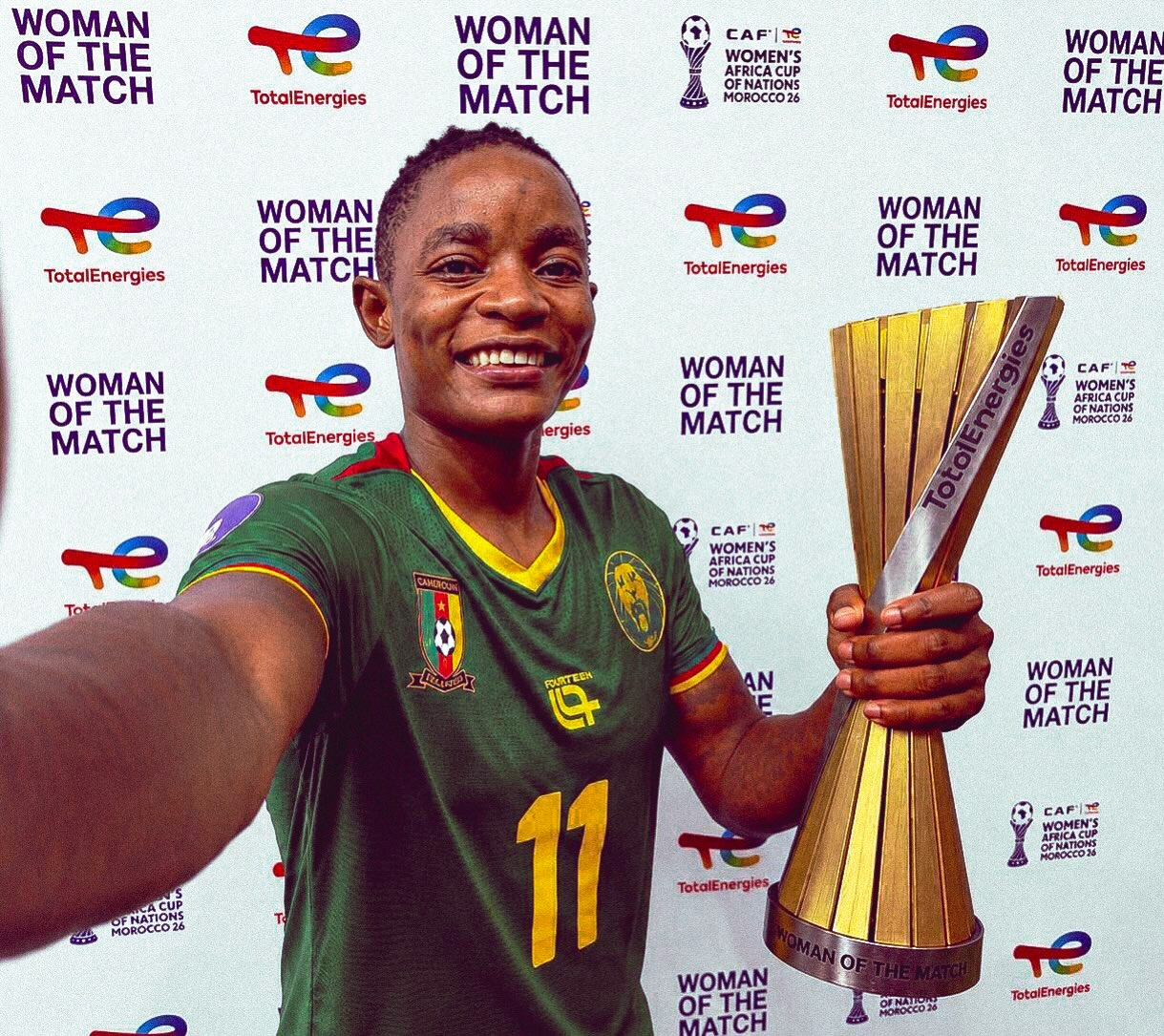
Ngah Manga had an opportunity to complete her hat-trick early in the second half when she went around Sikelo, but she fired wide with the goal open.
Malawi created their clearest opportunity shortly after the hour mark. Cameroon goalkeeper Michaely Bihina denied Tabitha Chawinga’s low effort before the forward’s sister, Temwa, fired the rebound wide.
Bihina had already established herself as one of the standout players of Cameroon’s tournament. She produced nine saves in the quarter-final victory over Nigeria and then made crucial interventions against Morocco, including stopping an extra-time penalty before saving three spot-kicks in the semi-final shootout.
Her performance continued in the final as Cameroon protected their three-goal advantage and secured a clean sheet.
Read: Eniola Bolaji Wins Gold at 2026 Peru Para Badminton International
A Remarkable Turnaround for Cameroon
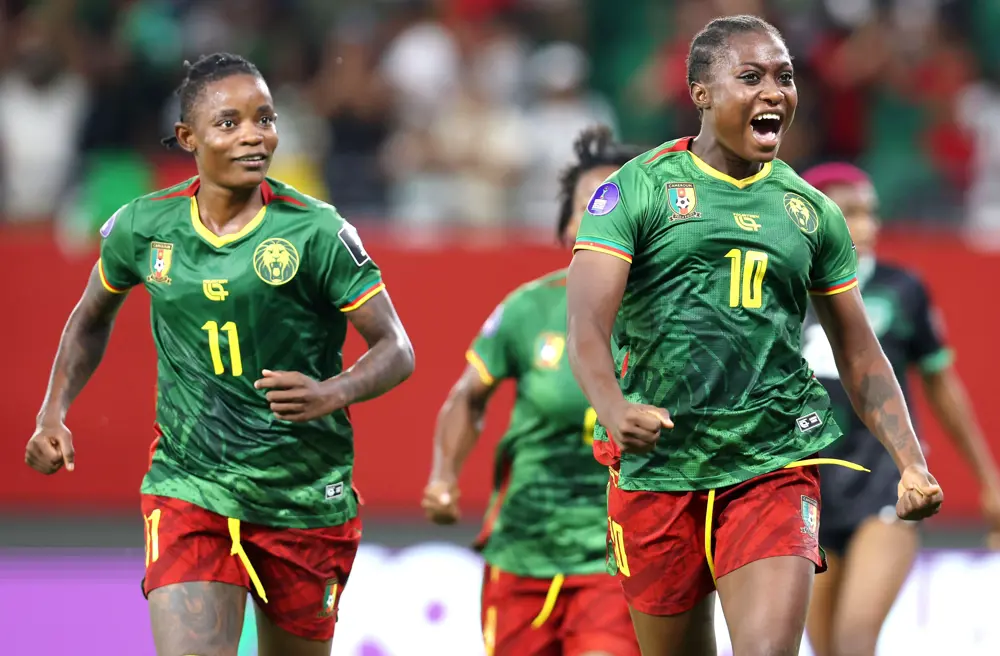
Cameroon’s triumph is particularly notable given the team’s difficult route to the tournament.
The Indomitable Lionesses missed the 2024 WAFCON and initially failed to qualify for the 2026 tournament after losing 3-1 on aggregate to Algeria in the second round of qualifying.
They eventually secured their place after the Confederation of African Football expanded the competition from 12 to 16 teams, with Cameroon advancing on the strength of their world ranking.
Once in Morocco, however, the team transformed their opportunity into a historic title run. Under coach Valentine Nguele, who took charge in June, Cameroon defeated Nigeria 1-0 in the quarter-finals before eliminating hosts Morocco on penalties in the semi-finals.
They then completed the job against Malawi with their most convincing performance of the knockout stages. The title also makes Cameroon only the fourth nation to win the WAFCON, joining record champions Nigeria, Equatorial Guinea and South Africa.
For Malawi, the final defeat brought an end to a remarkable debut campaign. Ranked 153rd in the world, the Scorchers had exceeded expectations by reaching the final on their first appearance at the tournament.
Both Cameroon and Malawi will now turn their attention to the 2027 FIFA Women’s World Cup in Brazil. Cameroon will arrive as African champions, while Malawi will take confidence from a historic WAFCON campaign that announced their arrival on the continental stage.
Cameroon have waited through three final defeats for this moment. In Rabat, the Indomitable Lionesses finally became African champions.
Follow RefinedNG for more stories spotlighting African excellence, inspiring achievements and the people shaping the continent’s future.