

In the 1980s, men’s tennis revolved around Europe and the United States. Centre courts were dominated by familiar flags. Then came Nduka Odizor, a young man from Lagos with a fearless serve-and-volley game and a nickname that sounded like royalty. They called him “The Duke”.
Odizor did not just compete. He climbed. He reached a career-high singles ranking of World No. 52 in 1984 and rose to No. 20 in doubles the same year, still the highest ranking ever achieved by a Nigerian male player. At a time when African representation in elite tennis was rare, he stepped onto the biggest stages and made himself impossible to ignore.
Here are five things to know about the man who carried Nigerian tennis into global contention.
1. He Cracked the World’s Top 60 and Meant It
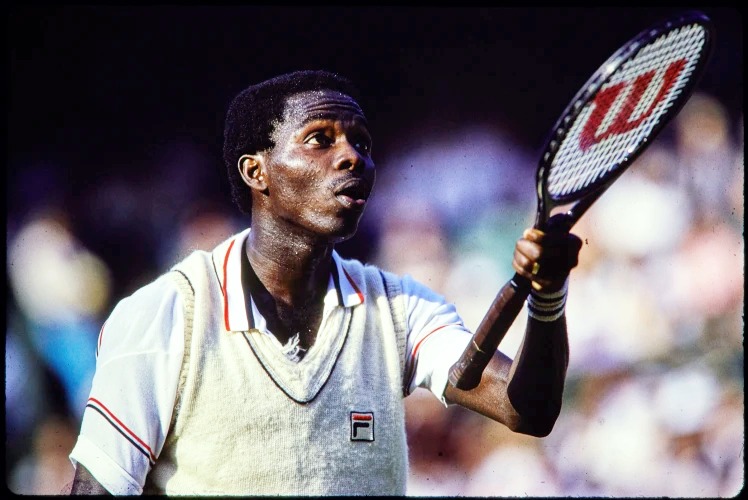
Let’s start with the numbers. In June 1984, Odizor reached a career-high singles ranking of World No. 52. That same year, he climbed to World No. 20 in doubles. For context, this was the golden era of power tennis. The margins were thin, and the competition was relentless.
His Grand Slam performances proved he belonged. At Wimbledon in 1983, he reached the fourth round. On grass. Against a field stacked with elite talent. Along the way, he stunned fourth seed, Guillermo Vilas, in a five-set comeback that lasted over four hours. Imagine walking onto Centre Court, going two sets down, and deciding, “Actually, no. Not today.” That was Odizor.
He also reached the fourth round of the US Open in 1984, reinforcing that his Wimbledon run was no fluke. For an African player in that era, these were not just results. They were statements.
Read: 2026 Aurora Tech Award: Adeola Ayoola Makes Top 10
2. Doubles Was His Playground
If singles showed his grit, doubles showcased his instincts.
Odizor won seven ATP doubles titles between 1983 and 1990. He partnered frequently with American David Dowlen, and together they built a formidable pairing. He also claimed titles with players such as Van Winitsky, Steve Meister, Andrew Castle and Christo van Rensburg.
His style suited doubles perfectly. He played aggressive serve-and-volley tennis, rushed the net and closed points decisively. On fast surfaces, that approach felt like controlled chaos, and it worked.
He reached the quarter-finals of the 1983 US Open in doubles, pushing deep into a major tournament at a time when African players rarely appeared in those later rounds. He did not just participate, he contended.
3. He Started as a Ball Boy in Lagos
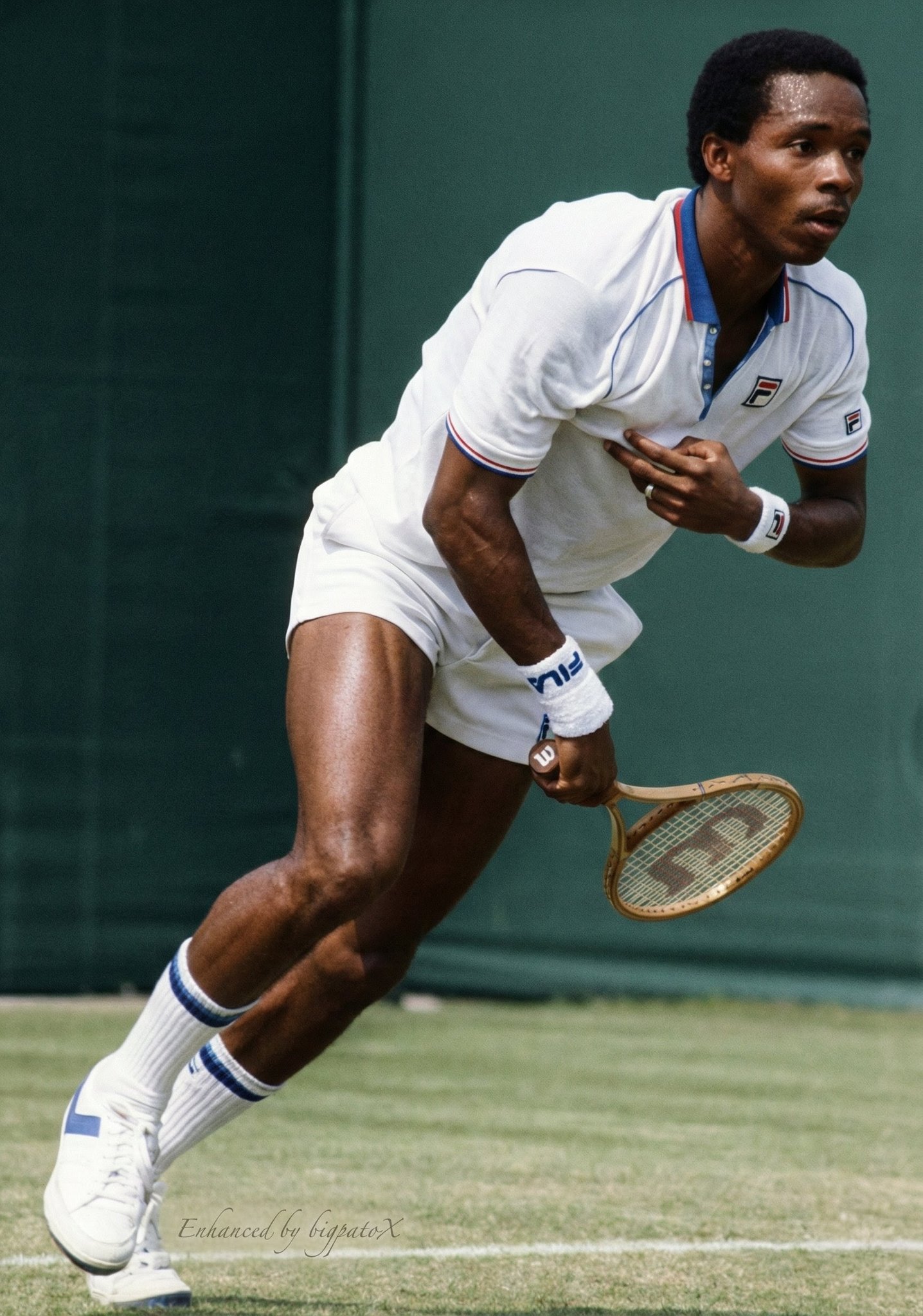
Before the rankings and the Centre Court battles, there was a ball boy at Ikoyi Club in Lagos.
Born on 9 August 1958, Odizor grew up in Maroko during Nigeria’s post-independence years. Resources were limited, but ambition was not. He first encountered tennis while earning pocket money as a ball boy. Watching the game turned into playing it.
As a teenager, he competed in local tournaments and won titles such as the Bendel Open and the Nigerian Open. Those early victories signalled potential. But to truly test himself, he needed bigger platforms.
He moved to the United States and enrolled at the University of Houston, where he earned All-American honours in 1978, 1980 and 1981. In 1981, the university named him Athlete of the Year. That transition from Lagos courts to American collegiate tennis sharpened his competitive edge and prepared him for the ATP Tour.
4. He Represented Nigeria on the Biggest Stages
Odizor did not forget where he came from.He represented Nigeria in the Davis Cup from 1986 to 1993, compiling a strong 20–13 overall record, including 15–7 in singles. When Nigeria needed points, he delivered.
In 1988, he competed at the Seoul Olympic Games in both singles and doubles. He faced tough opposition, including American Robert Seguso in singles and the French duo of Guy Forget and Henri Leconte in doubles alongside Tony Mmoh. The results did not end in medals, but the presence mattered.
At a time when African tennis operated with fewer resources and limited exposure, Odizor stood on global stages wearing green and white. That visibility inspired younger players who suddenly saw something tangible: a Nigerian competing at the highest level.
Read: Isata Dumbuya Named on TIME’s Women of the Year 2026 List
5. His Legacy Extends Beyond the Baseline

After retiring in 1992, Odizor did not simply step away. He founded the Duke Odizor International Tennis Foundation (DOIT), focused on providing equipment and opportunities for young players in Nigeria.
He has advocated for long-term grassroots development, arguing that talent requires structure, not just hope. Odizor has mentored players in Nigeria and in Houston, where he resides, and continues to speak about rebuilding tennis infrastructure at home.
His career earnings, titles and rankings tell one story. His commitment to developing the next generation tells another. Both matter.
The Duke’s Enduring Standard
Nduka Odizor proved that a Nigerian could compete among the world’s best and hold his own. He reached heights that remain unmatched in Nigerian men’s tennis. More importantly, he shifted perception.He showed that global excellence is not limited by geography. It is shaped by preparation, resilience and the willingness to step onto unfamiliar courts without flinching.
At RefinedNG, we celebrate stories like this: athletes who expanded what was possible and carried their flags with confidence. Follow RefinedNG for more spotlights on Nigerians who continue to redefine excellence across sport, business, and culture.