
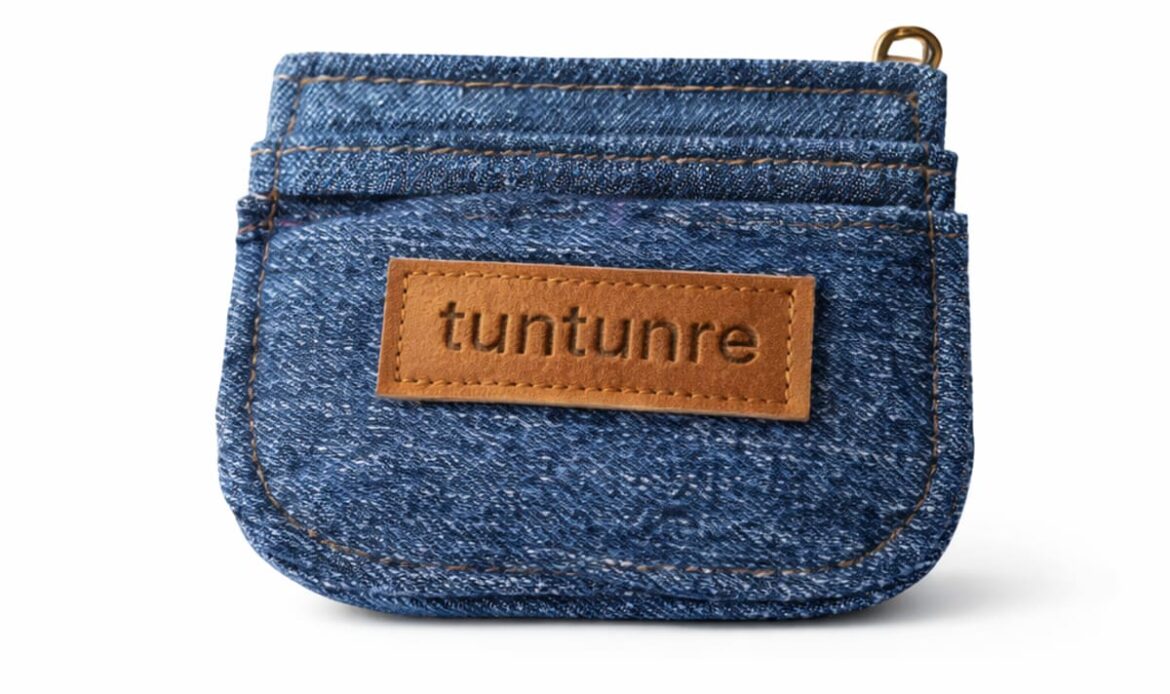
What happens to your old jeans when you are done with them? Most people don’t think twice. They get tossed, donated, or forgotten at the back of a wardrobe until they no longer exist in memory. But Temilade Salami asked a different question: what if those jeans never really became waste in the first place?
That question is what led to Tuntunre, a sustainable fashion brand built on one simple but powerful idea: old denim deserves a second life. The name itself comes from Yoruba, meaning “this is new”, which is quite fitting for what the brand is trying to do. It is not just recycling. It is reinvention.
And honestly, the timing could not be more relevant. With textile waste piling up and fast fashion moving at breakneck speed, the fashion industry has a waste problem most people don’t talk about enough. Tuntunre steps right into that silence and turns it into something visible, useful, and surprisingly stylish.
Read: How Temilade Salami is Making Climate Education a Human Right
From Environmental Work to Everyday Wearable Impact

Temilade Salami is not new to environmental conversations. Her work has long lived in climate education and youth-led sustainability projects. But Tuntunre shifts that work from advocacy into something more tactile, something you can actually hold in your hands.
Instead of only speaking about waste, she is building with it.
At the core of Tuntunre is upcycling, but not in the “DIY craft table” sense people often imagine. This is structured, intentional design work. Old denim is carefully selected, cleaned, and reconstructed into functional fashion pieces like bags, accessories, and wearable items that feel contemporary rather than experimental.
One standout piece from the early collection is the Lagos Tote, a practical, everyday bag designed for movement, work, and city life. It is the kind of item that does not scream “sustainable fashion” but embodies it.
That is part of the genius here. It is not trying to look like a statement about sustainability. It simply is.
The Bigger Story Hidden Inside Every Stitch
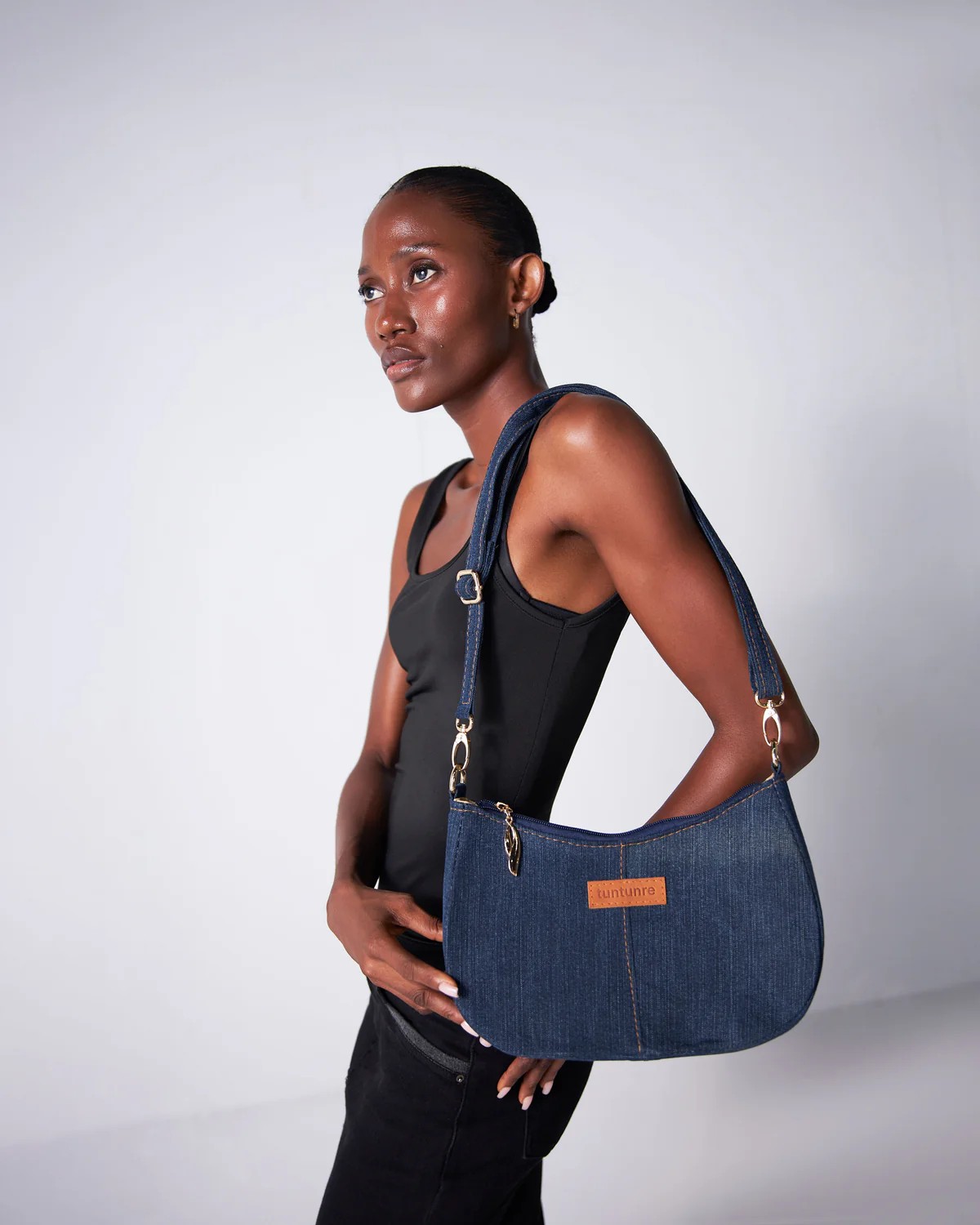
It is easy to look at Tuntunre as just a fashion brand. But underneath the stitching is a much bigger story about waste, water, and work.
Denim is one of the most resource-heavy fabrics in the world. A single pair of jeans can require thousands of litres of water to produce. Multiply that by global consumption, and the environmental cost becomes hard to ignore.
Now imagine reversing that flow.
Tuntunre works with discarded denim that would otherwise end up in landfills or informal waste streams. Instead of adding pressure to production systems, it pulls value from what already exists. That shift alone changes the conversation from consumption to circularity.
There is also a human layer here. The brand works with local artisans and tailors, creating what Temilade describes as “green jobs”. These are not just sewing roles. They involve skill-building in circular fashion techniques, turning traditional craftsmanship into something globally relevant again.
So the impact is two-sided. Less waste in the environment, more opportunity in local communities.
Read: How John Imah Built a $1.5 Billion Fashion Empire With AI
Why This Matters for the Future of Nigerian Fashion
Sustainable fashion is often discussed as a global trend, but Tuntunre makes it feel very local and very immediate. In a space where fast fashion dominates wardrobes and affordability often drives choices, introducing sustainability requires more than good intentions. It requires creativity that still feels accessible.
That is where Tuntunre positions itself differently. It does not try to compete with mass production. Instead, it reframes value. A bag made from old denim is not just “eco-friendly”, it becomes a conversation piece about design, identity, and resourcefulness.
It also signals something important about the direction of Nigerian fashion, that innovation does not always have to mean starting from scratch. Sometimes it means rethinking what already exists.
And in that sense, Tuntunre is less about denim and more about mindset.
Where Fashion Meets Responsibility
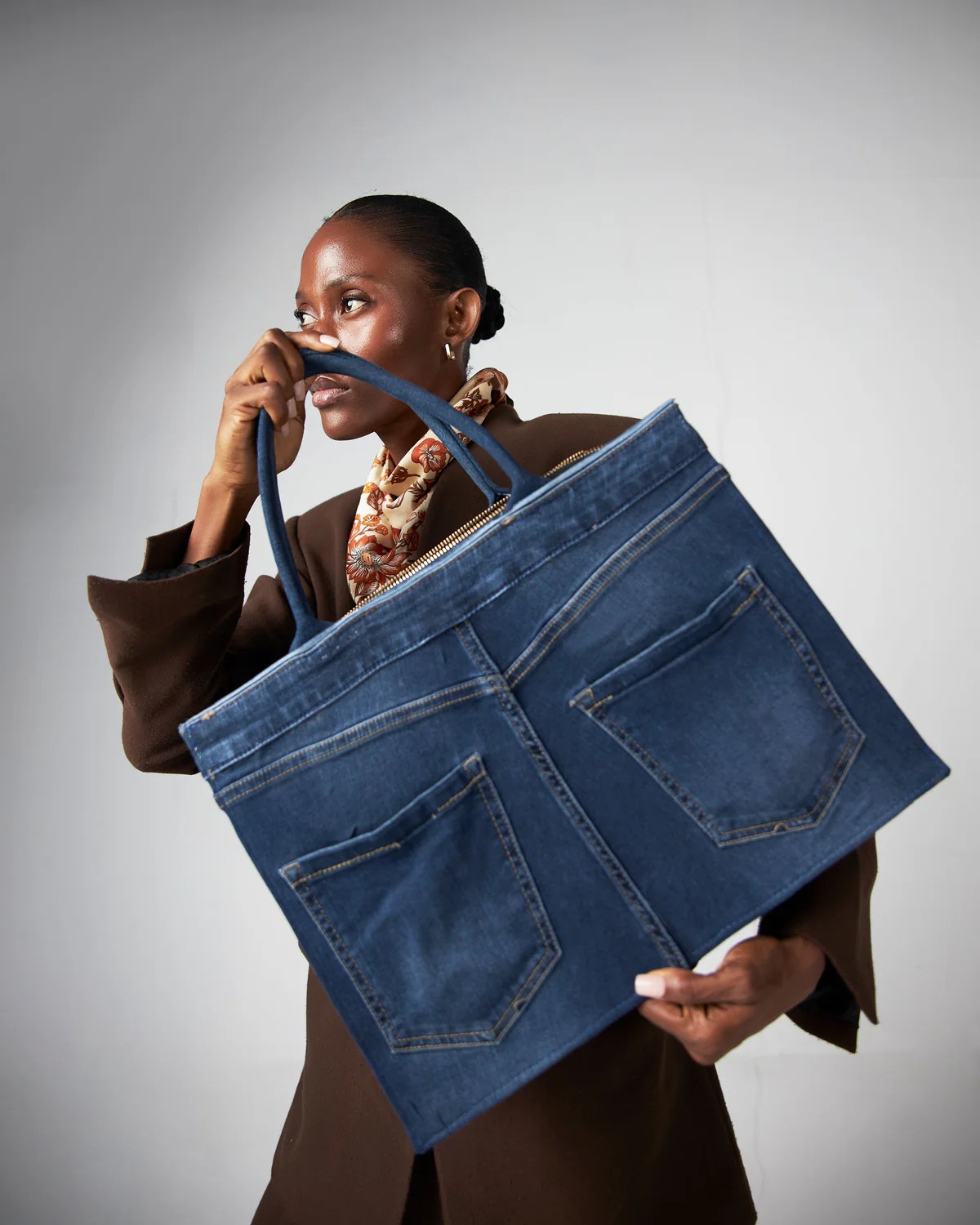
What makes this initiative stand out is not just the product itself, but the philosophy behind it. There is a clear belief running through the brand, that waste is often a design problem, not an end point.
By reworking discarded materials into something functional and desirable, Tuntunre is challenging how people think about ownership, consumption, and value.It also pushes a subtle but important question: if something can be beautiful again, was it ever truly useless?
That is the conversation this brand is starting, one denim piece at a time.
If stories like this interest you, then you will want to keep an eye on what is coming next from RefinedNG. We highlight the people, ideas, and innovations shaping culture in ways that actually matter.Join the conversation, share your thoughts, and stay connected with RefinedNG for more stories that go beyond the surface.