
Across Africa, millions of people run businesses every day but still cannot access loans, credit, or proper financial support because their work exists outside formal systems.
For Lionel Yao, that gap became the inspiration behind S-Cash, a fintech platform designed to help informal workers build financial identity through their everyday transactions.
In this conversation with RefinedNG, the Ivorian entrepreneur shares how nano-banking could reshape financial inclusion in Africa, why the informal economy deserves more attention, and what it really takes to build a fintech company solving real problems on the continent.
1. Before we go into the main topic, can you tell us who Lionel Yao is? Where do you come from? What has shaped you? And what did your life look like before S-Cash?

LIONEL YAO: I am an Ivorian entrepreneur with a background in banking, insurance, and electronic engineering. I previously served as Managing Director of the Fintech division at New Digital Africa. I am also a speaker and trainer in digital finance for banking executives and microfinance institutions. My work is driven by a strong passion for financial inclusion, digital transformation, and social impact.
I come from an environment where I very early observed the contrast between the immense economic energy of African populations and the limited financial tools available to support them.
What struck me most was seeing millions of people working every day without ever being able to access financing—not because they lack potential, but simply because they operate within the informal economy and lack any form of financial traceability.
Before S-Cash, I was already involved in innovation and digital services projects. Over time, I came to realise that in Africa, the real revolution would not only be technological. It would be financial, social, and structural.
The question was no longer simply: “How do we build an application?” but rather: “How do we create an economic identity for millions of people who are currently invisible to the financial system?”
That reflection is what led to the creation of S-Cash.
Read: Inside Eloïne Barry’s Media Influence in Africa
2. Regarding the observation you shared: 40 to 90% of the economy is informal, 80% of the population lives on less than $2 a day and lacks access to financing due to missing accounting traceability. Many people feel powerless in front of these numbers. What allowed you to see this as an opportunity?
LIONEL YAO: Because behind every statistic, I see human beings—traders, artisans, young entrepreneurs, women who work every day but remain excluded from traditional financial systems.
Many consider the informal economy a problem. I see it as the largest emerging economy in Africa.
The real issue is not the absence of economic activity. The real issue is the lack of tools capable of transforming that activity into usable financial data.
When a street vendor carries out daily cash transactions, they are in fact generating measurable economic activity. But because this activity is not digitised, it remains invisible to banks.
We therefore decided to transform every daily transaction into a financial identity. That is the opportunity: using technology to convert the informal economy into a financeable economy.
3. Concretely, what is a nano-bank? Can you explain what happens when someone in Côte d’Ivoire opens an S-Cash account for the first time? What opportunities does it unlock?

LIONEL YAO: A nano-bank is a new generation of financial institution designed for populations historically underserved by conventional financial systems and operating within the informal sector.
The idea is simple: make financial services accessible, instant, mobile, and adapted to real economic realities on the ground.
When someone opens an S-Cash account, they join a digital infrastructure that provides both financial services and income-generating opportunities, while progressively building a transaction history (scoring system) that can later unlock access to credit and financial support.
But the most important part comes afterwards.
Each transaction contributes to building a dynamic financial identity. Over time, this traceability unlocks access to services that were previously out of reach: nano and micro-credit, business financing, alternative scoring, insurance, and even cashless payment solutions.
We are not just building a payment application. We are building a financial infrastructure of trust for millions of Africans.
4. Formalising very small businesses through financing is an ambitious idea. How does this process work in practice, and what has surprised you most about how S-Cash is being used?
LIONEL YAO: Traditionally, small entrepreneurs are first asked to formalise administratively before gaining access to financing. We have reversed that logic.
At S-Cash, we believe financing can become a driver of formalisation.
Concretely, when a merchant (micro-entrepreneur or very small business) starts using our solution to accept payments or manage cash flows, we progressively generate behavioural and transactional data. This data allows us to assess their real activity, even without traditional accounting documents.
What surprised us the most was the speed of adoption among micro-entrepreneurs. Many immediately understand the value of digitising their activities once they realise it can unlock access to credit and growth.
We were also impressed by the financial discipline of many small traders, often underestimated by traditional banking systems.
5. You have already influenced regulatory discussions at the BCEAO. How does a startup founder end up influencing public policy, and how does that responsibility feel?
LIONEL YAO: I believe African regulators today increasingly recognise that fintech innovation can be a major driver of financial inclusion and economic growth.
When you build solutions that directly address real-world economic realities, you naturally become part of discussions shaping regulatory evolution.
Our role is not to bypass regulation, but to help design frameworks adapted to Africa’s new digital realities.
This is a significant responsibility because behind every regulatory decision, there are millions of people who can either gain access to opportunities or remain excluded.
I approach this responsibility with humility and a strong sense of accountability.
Read: Juliet Ehimuan: From Google West Africa to Cannes
6. Building a fintech in Côte d’Ivoire has certainly not been easy. What has been the most difficult aspect of this journey that most outsiders do not see?
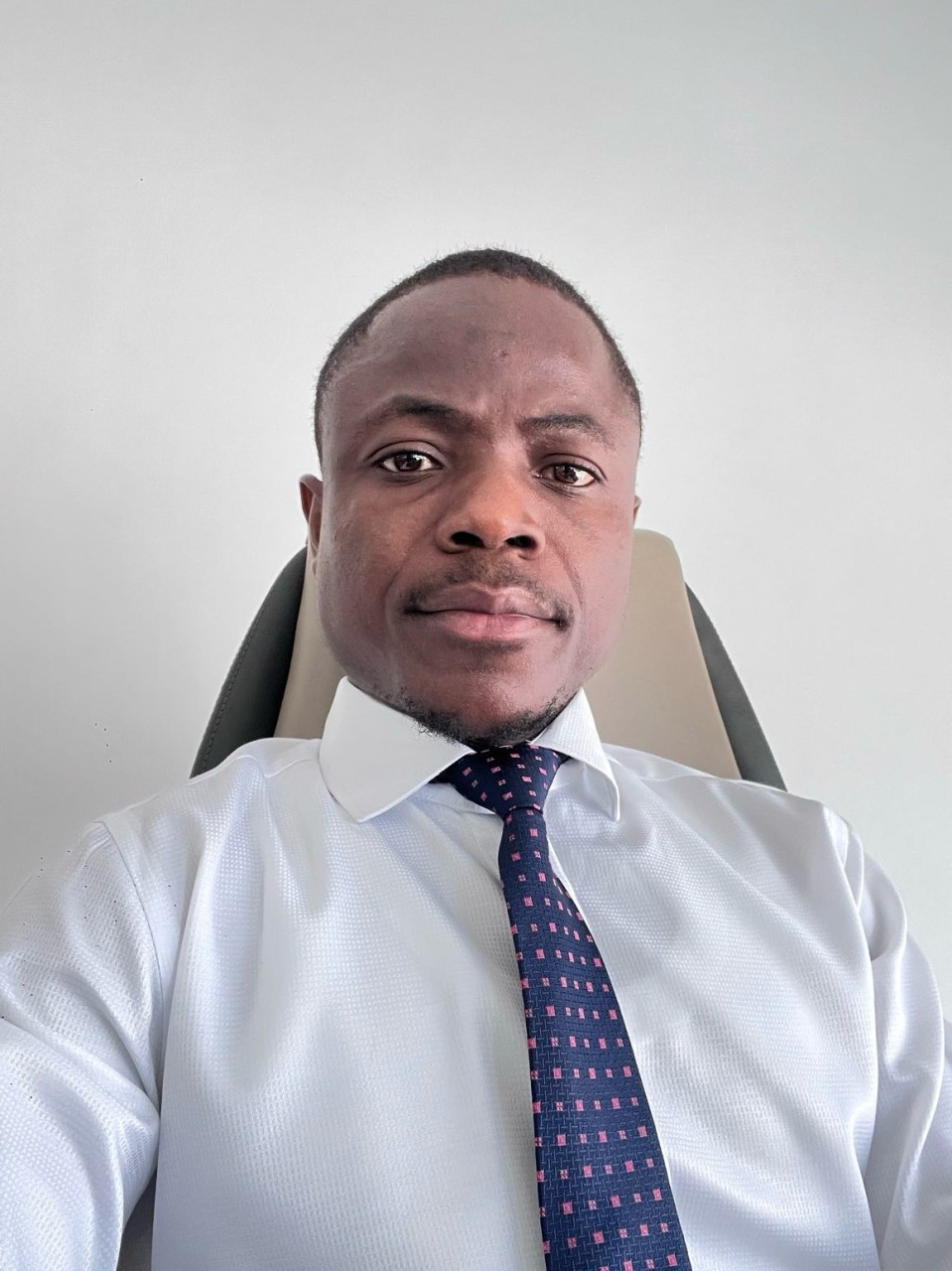
LIONEL YAO: The most difficult part is not always technology. It is building trust around innovative models that move away from traditional frameworks.
When you innovate in finance, you must simultaneously convince users, partners, investors, and sometimes even institutions—and this requires significant mental and strategic energy.
What most people do not see are the years of resilience, phases of doubt, endless discussions, and personal sacrifices behind every milestone.
Building an African fintech requires vision, endurance, and constant adaptability, especially in environments where resistance to change is a natural part of innovation.
7. What is the future of nano-finance, and what kind of Africa are you helping to build?
LIONEL YAO: I believe traditional microfinance will evolve into more integrated, intelligent financial systems, in other words, into hybrid models combining nano-finance, embedded finance, digital services, nano-banking, and microfinance institutions for higher transaction segments.
Tomorrow, financing decisions will no longer rely solely on traditional guarantees or administrative documents. They will also be based on transactional flows, economic behaviour, and digital data.
The Africa we are building is one where young entrepreneurs can access financial services directly from their phones, without excessive barriers, geographic limitations, or social discrimination.
An Africa where street vendors, artisans, and small traders become economically visible and financeable.
Ultimately, our vision goes beyond fintech. We aim to build an economic infrastructure capable of transforming African entrepreneurial energy into structured and sustainable wealth.