

Nigeria’s defence technology ambitions are tightening into sharper focus as Terra Industries appoints Nnamdi Chife as Vice President of Military Relations, reinforcing its push into formal defence manufacturing partnerships.
The Abuja-based startup, known for building drones and automated surveillance systems, is transitioning from product development to institutional execution. Chife’s return signals a strategic move to strengthen coordination with Nigeria’s armed forces at a time when the company is deepening its integration into the country’s defence architecture.
The appointment follows Terra’s recent memorandum of understanding with the Defence Industries Corporation of Nigeria to establish a joint venture focused on local assembly, research, and training in drones, robotics, and cybersecurity systems.
Read: 2026 Aurora Tech Award: Adeola Ayoola Makes Top 10
From Prototype to Procurement
Founded in 2023 by the Chief Executive Officer, Nathan Nwachuku, and co-founder, Maxwell Maduka, Terra Industries has positioned itself as a homegrown alternative to imported defence hardware. The company raised $34 million in 2026 from investors including 8VC, Lux Capital, and Resilience17 Capital, making it one of Africa’s most capitalised defence-tech ventures.
While early growth centred on engineering and manufacturing capabilities, the DICON partnership introduces a new layer of complexity: procurement cycles, compliance standards, and long-term institutional alignment with military leadership.
Chife will lead Terra’s military engagement strategy, manage high-level relationships within the armed forces, and provide advisory input to the executive team and board. His mandate places him at the intersection of startup agility and military bureaucracy, where credibility and strategic navigation are as critical as technical performance.
Security Sector Experience
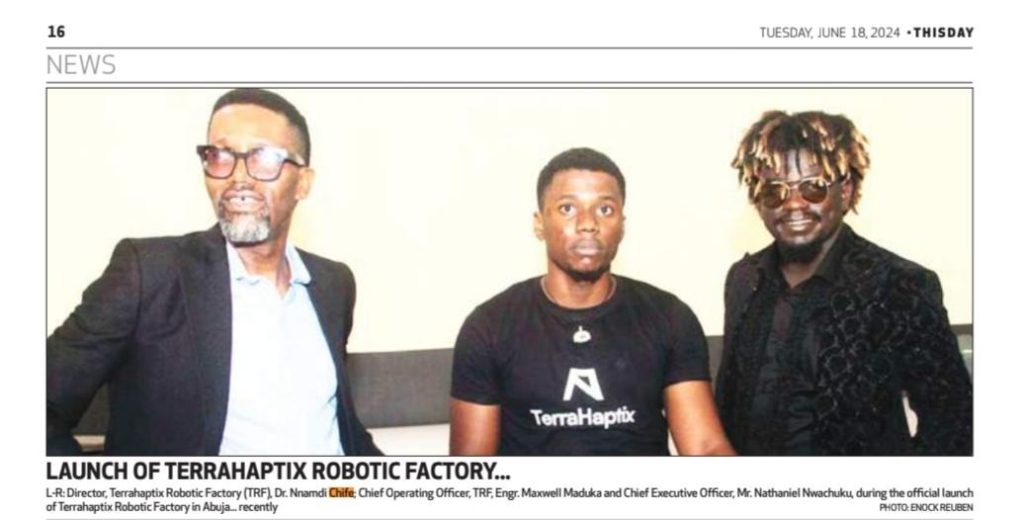
Chife brings over 15 years of experience across finance, intelligence, and security advisory roles. He previously served on Terra’s board in 2023 during the company’s factory development phase before departing amid a restructuring and rebrand.
Beyond Terra, he founded Chive GPS, a Lagos-based security intelligence firm that has worked with Nigerian law enforcement agencies on fraud investigations, asset tracing, and geolocation intelligence. He has also advised on counter-insurgency and internal security challenges, building networks within Nigeria’s defence establishment.
His background in peace and conflict studies, combined with operational exposure in security consulting, positions him as a bridge between private defence innovation and state-led security priorities.
Read: African Defence Tech Startup, Terrahaptix, Reaches $100m Valuation
Local Manufacturing Push
Nigeria has faced mounting pressure to reduce reliance on imported defence systems amid persistent insurgency and rising security costs. The federal government has signalled renewed interest in domestic production, with DICON playing a central role in that strategy.
By formalising collaboration with DICON, Terra is no longer operating solely as a private contractor but as a participant in Nigeria’s broader defence industrial base. The shift increases expectations around transparency, capacity building, and technology transfer.
For Terra, the appointment of a dedicated military relations executive reflects operational maturity. Success in defence technology increasingly depends not only on hardware capability but on sustained trust with procurement authorities and alignment with national security doctrine.
As African governments reassess defence spending and local content policies, Terra’s trajectory will be closely watched as a test case for whether venture-backed defence startups can integrate effectively into state manufacturing ecosystems.
For more in-depth reporting on African innovation, defence technology, and emerging market startups, follow RefinedNG and stay ahead of the stories shaping the continent’s future.