
If someone asked you to name the largest animal migration on Earth, chances are you’d point to the wildebeest of Kenya and Tanzania. After all, the Great Migration across the Serengeti and Maasai Mara has starred in countless documentaries and bucket lists.
But here’s a plot twist worthy of a nature documentary.
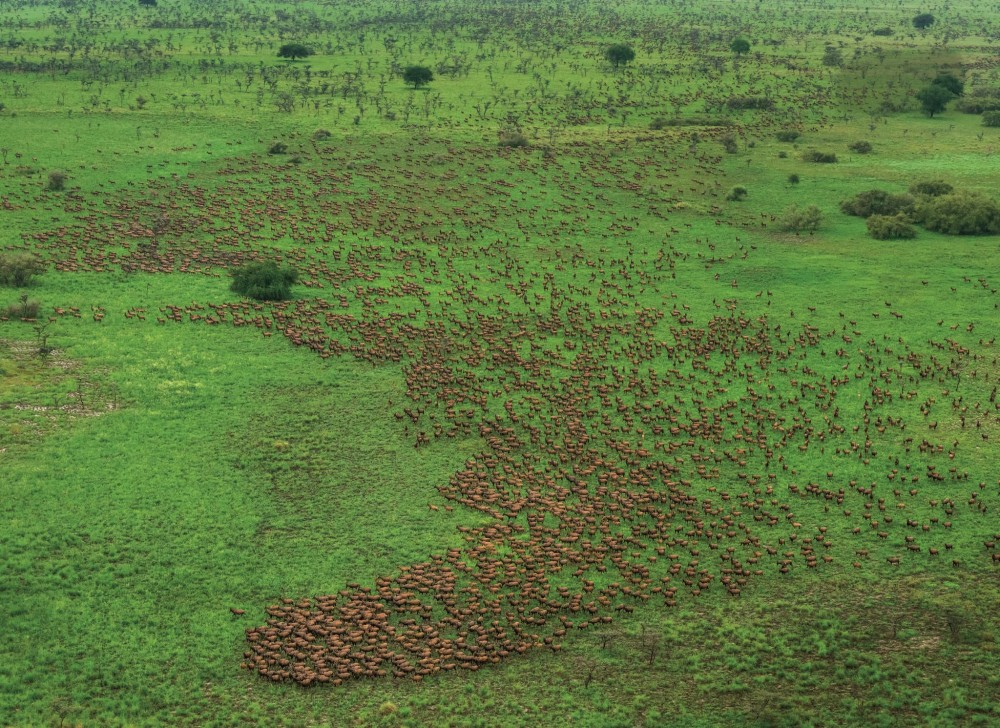
The world’s largest land mammal migration does not happen in East Africa’s famous safari parks. It happens in the vast grasslands and wetlands of South Sudan, where an estimated six million antelope undertake an extraordinary seasonal journey known as the Great Nile Migration.
For years, this incredible phenomenon remained largely hidden from the world. Now, thanks to extensive aerial surveys, scientists and conservationists are beginning to understand just how remarkable it really is.
A Migration That Makes the Serengeti Look Small
The Serengeti’s annual wildebeest migration involves around two million animals and is rightly considered one of the greatest wildlife spectacles on Earth. Yet the Great Nile Migration is roughly three times larger.
The migration stretches across the Boma-Badingilo landscape in South Sudan and into parts of neighbouring Ethiopia. Covering an area comparable to the size of Greece, this enormous ecosystem remains one of Africa’s last truly wild frontiers.
The stars of the journey are four antelope species: the white-eared kob, tiang, Mongalla gazelle, and Bohor reedbuck. Together, they form a moving sea of wildlife that shifts across grasslands, wetlands, and open plains throughout the year.
Unlike a neatly organised parade, the migration is a constant flow of overlapping herds responding to changing seasons and the search for food and water.
Read: Before Travel Content Was a Trend, There was Goge Africa
Nature’s Giant Traffic System
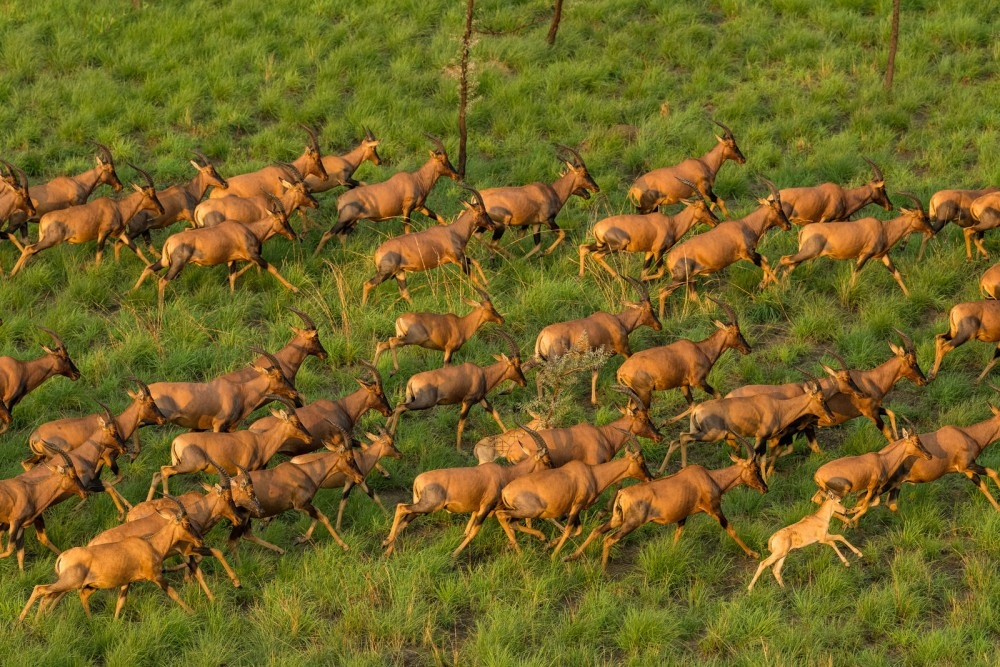
The Great Nile Migration is powered by one simple force: survival.
As the seasons change, rainfall transforms the landscape. During dry periods, the antelope move towards permanent water sources and lush grazing areas, particularly around the Sudd wetlands and Boma National Park.
When the rains arrive, fresh vegetation spreads across the region, encouraging the herds to disperse over thousands of kilometres.
This movement does more than keep the animals alive. It helps maintain the health of the ecosystem by spreading nutrients, shaping grasslands, and supporting predators and scavengers that depend on the migration.
The surrounding wetlands and forests also play a crucial role in protecting water systems that eventually feed the Nile River, one of the world’s most important waterways.
In many ways, the migration acts like a natural engine that keeps the landscape functioning.
Why the World Only Recently Discovered It
One of the most surprising things about the Great Nile Migration is that it isn’t new. The animals have been making this journey for generations. The mystery was simply that nobody knew how many there were.
South Sudan gained independence in 2011 after decades of conflict, and many parts of the country remained difficult to access for researchers. Large-scale wildlife surveys were rare, leaving huge gaps in scientific knowledge.
That changed when conservation organisation African Parks partnered with South Sudan’s government to conduct extensive aerial surveys across the region. The results stunned experts.
Around six million antelope were counted, confirming the Great Nile Migration as the largest known land mammal migration on Earth. The discovery offered a rare piece of good news for global conservation at a time when many wildlife populations are declining.
It also reminded the world that Africa still holds extraordinary natural wonders waiting to be fully understood.
Read: Lesotho: The African Country Where It Snows
A Natural Wonder Worth Protecting
The Great Nile Migration is a story of hope, but it also comes with challenges. The same landscape that supports millions of animals is home to hundreds of thousands of people whose communities have depended on these natural resources for generations.
Rapid development, expanding agriculture, road construction, oil exploration, and illegal commercial hunting are placing increasing pressure on the ecosystem. Conservationists warn that without careful management, this remarkable migration could face serious risks in the years ahead.
The good news is that efforts are already underway to protect the region. Partnerships between local communities, conservation groups, and the South Sudanese government aim to balance environmental protection with economic opportunities for the people who call the area home.
The Great Nile Migration is also changing perceptions of South Sudan. Beyond headlines about conflict, it reveals a country with extraordinary natural wealth and one of the planet’s greatest wildlife spectacles.
Africa is filled with hidden histories, remarkable cultures, and natural wonders that deserve the spotlight. Follow RefinedNG for more stories celebrating the people, places, and phenomena that make the continent extraordinary.