
For many people, a trip to Lake Naivasha is meant to be calm, open water, fresh air, maybe a boat ride. But for Joseph Nguthiru, it became something else entirely. On one visit, his movement across the lake was stalled by thick layers of water hyacinth, an invasive plant that had spread so aggressively it was choking parts of the ecosystem. What should have been a smooth ride turned into a frustrating stop.
But instead of brushing it off as just another environmental issue, he paused. The question that followed was simple, but powerful: what if this problem could become something useful? That moment didn’t come with a grand plan or a fully formed idea. It came with curiosity, and that curiosity would eventually shape a solution that blends engineering, sustainability, and community impact.
When Theory Meets Reality
At the time, Joseph was studying civil and environmental engineering at Egerton University, where most solutions begin on paper, models, calculations, and structured systems. But this was different. The lake had given him a real-world problem, one that didn’t need theory alone but experimentation.
For his final-year project, he decided to explore the potential of water hyacinth beyond its reputation as waste. It wasn’t the easiest route. Working with organic material is unpredictable, and turning plant fibers into something functional takes patience, trial, and a lot of iteration. Still, he kept at it. Slowly, the idea began to take shape: what if this invasive plant could be processed into biodegradable alternatives to plastic?
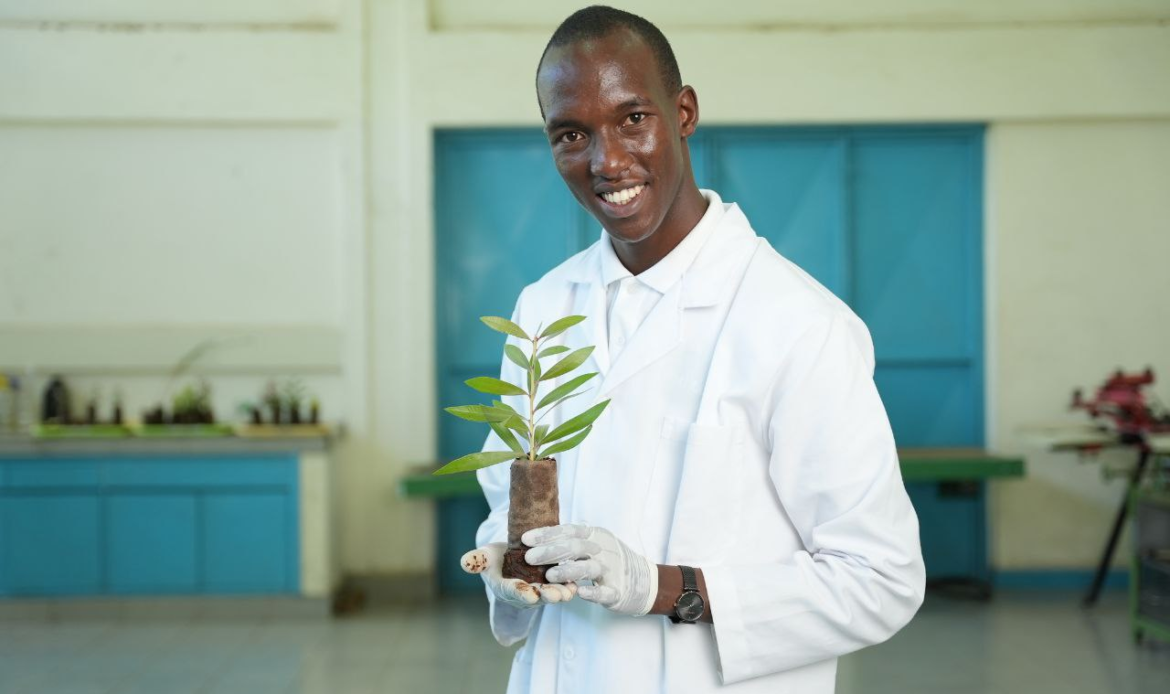
That thinking led to the early stages of HyaPak, a solution that didn’t just aim to remove a problem from the environment but to give it a second life.
Read: Did You Know? Africa’s First Female Crane Operator Is Nigerian
Engineering a Second Life for Waste
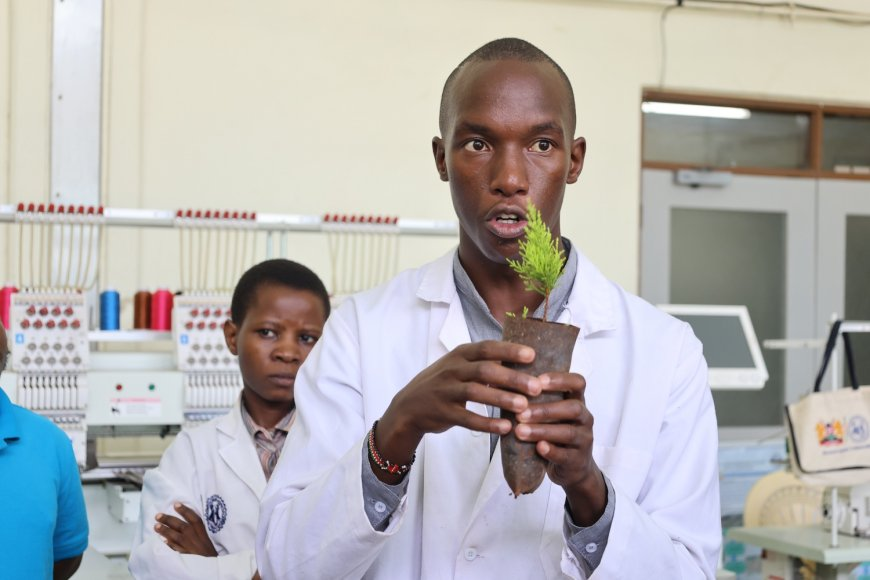
Water hyacinth is known for how quickly it spreads, blocking waterways, affecting fishing, and disrupting local ecosystems. For communities around Lake Naivasha, it’s more than an environmental issue; it’s an economic one too. Joseph’s approach didn’t try to fight the plant alone. Instead, he focused on transforming it.
Through HyaPak, the harvested hyacinth is processed into biodegradable products like seedling bags and eco-friendly packaging. It’s a simple idea when you hear it, but behind it is a layered system, collection, processing, product development, and distribution, all designed to work within the local environment.
The impact is practical and visible. Clearing the hyacinth helps restore access to the lake. Turning it into products reduces dependence on plastic. And involving local communities in harvesting and processing creates income opportunities. It’s a cycle where environmental clean-up and economic value move together, not separately.
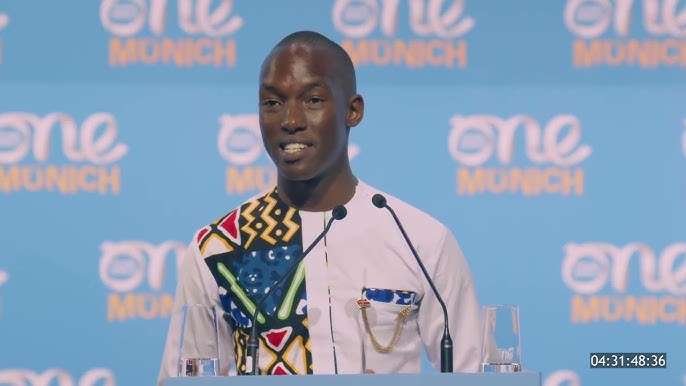
This kind of thinking has not gone unnoticed. Joseph’s work has earned recognition on global platforms, including the United Nations Environment Programme through the Young Champions of the Earth prize, and acknowledgement at COP28. But beyond the awards, what stands out is how grounded the solution remains, practical, local, and scalable.
Building Beyond One Idea
HyaPak is not where the story stops. If anything, it reflects a broader pattern in Joseph’s work, looking at environmental challenges as systems that can be improved with the right mix of technology and community involvement.
He has been involved in initiatives like M-Situ AI, which focuses on forest monitoring and protection, and AfroClimate, which supports climate awareness and action across African communities. Through the Adopt a River Initiative, he has also contributed to efforts aimed at restoring polluted rivers while educating people on environmental responsibility.
Each project may focus on a different issue, such as forests, rivers, or waste, but the approach remains consistent. Identify a real problem, understand how it affects people, and build solutions that are both functional and accessible. It’s not about isolated innovations; it’s about connecting them into a larger ecosystem of impact.
Read: Grace Ladoja Makes History as First African Woman to Design Nike Sneaker
What Happens When Engineering Meets Purpose?
Joseph Nguthiru’s journey shows what can happen when curiosity is followed through with action. A blocked path on a lake became the starting point for a solution that now touches environmental restoration, sustainable production, and community livelihoods.
It also raises a broader thought. Across Africa, there are everyday problems that are often seen as routine, things people work around instead of rethinking. But sometimes, those same problems hold the starting point for entirely new ideas.
At RefinedNG, we’re always looking to spotlight stories like this, people who see differently, build intentionally, and create solutions that matter where they are. If you know someone doing work like this, or you’re building something worth sharing, we’d love to tell your story.