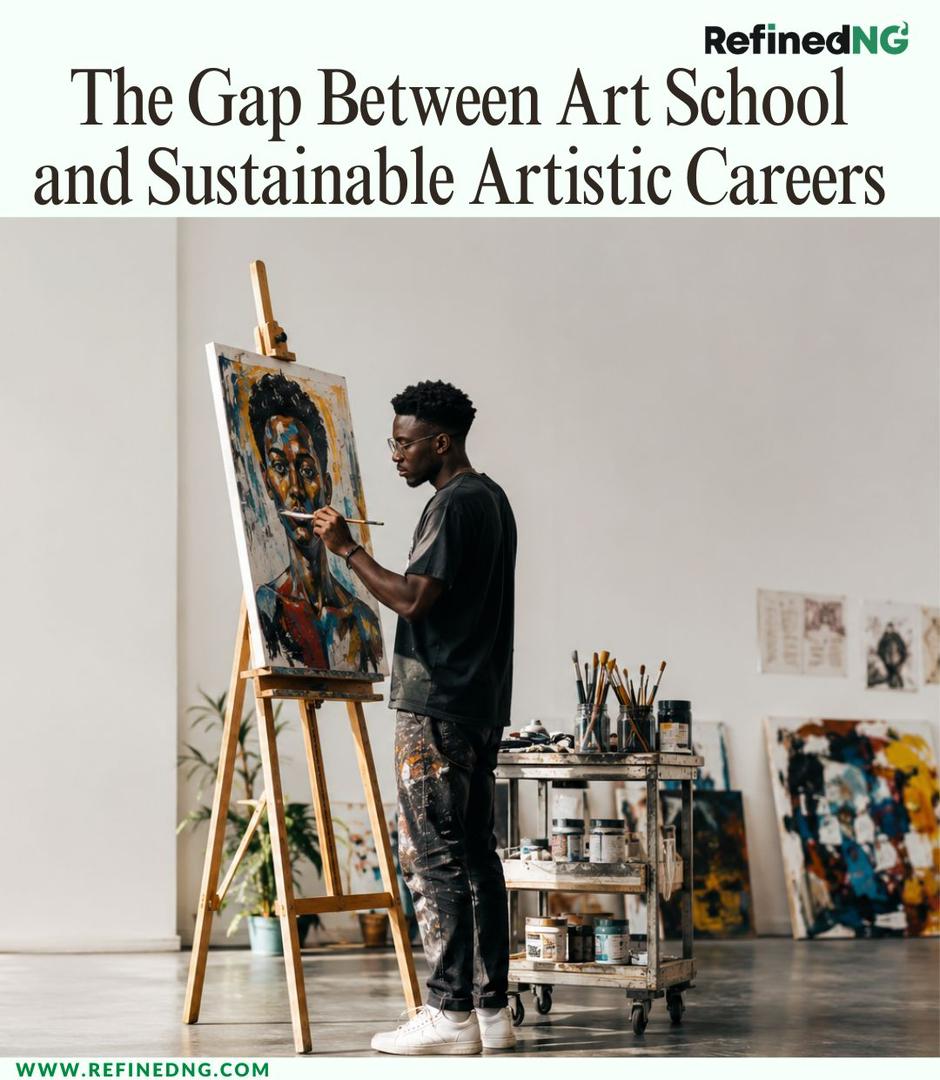
Every year, universities and creative institutions across Nigeria produce incredibly talented artists. Young painters, sculptors, illustrators, mixed-media creators, and visual storytellers graduate with strong technical skills, bold ideas, and fresh perspectives on contemporary African creativity.
The talent is obvious. What is less obvious is what happens after graduation.
For many emerging artists, leaving school means entering an industry that is still difficult to navigate sustainably. The transition from classroom creativity to professional survival can be overwhelming. Some artists struggle to find platforms to showcase their work. Others face challenges understanding pricing, networking, branding, or how to position themselves within the wider creative ecosystem.
In many cases, the issue is not artistic ability. It is the absence of systems that help young creatives move from potential into long-term sustainability. That gap deserves more attention than it currently gets.
Because while Nigeria continues to gain global recognition for its creative industries, many emerging visual artists are still trying to figure out how to build stable careers within the same ecosystem they are expected to strengthen.
The Missing Bridge Between Education and Opportunity
Art school teaches creativity, technique, history, experimentation, and discipline. But professional survival in the art industry often requires far more than artistic skill alone.
Artists also need visibility. They need access to collectors, exhibitions, collaborators, mentors, media platforms, and industry networks that can help their work reach the right audiences. They need opportunities to understand the business side of creativity, from pricing and licensing to branding and long-term positioning.
This is where many emerging artists encounter difficulties.
A talented graduate may have an exceptional portfolio but still struggle to access meaningful exposure opportunities. Another may create culturally relevant work but lack the networks needed to gain visibility beyond their immediate environment.
Without intentional support structures, many creatives end up operating in isolation.
Some eventually step away from their artistic practice entirely, not because the talent disappeared, but because sustainability became difficult to achieve.
That loss affects more than individual careers. It affects the future strength of the creative ecosystem itself. Because industries grow when talent is consistently nurtured, supported, and connected to opportunity.
Why Sustainable Artistic Careers Matter to the Creative Economy
Conversations about Nigeria’s creative economy often focus heavily on music and film, but visual art is also contributing to cultural influence, economic activity, and international recognition in important ways.
Behind every successful artistic ecosystem is an entire network of economic activity. Galleries, framers, photographers, curators, event organisers, designers, marketers, art handlers, creative agencies, cultural media platforms, and tourism experiences all benefit from thriving creative industries.
When artists succeed sustainably, entire ecosystems grow around them.
There is also a cultural dimension to this conversation. Emerging artists document contemporary realities in ways that shape identity, preserve stories, and influence how Nigeria is seen globally. Their work reflects conversations around urban life, sustainability, heritage, politics, technology, and social change.
Supporting artistic careers therefore goes beyond individual success stories. It becomes part of building a stronger creative economy capable of generating both cultural and economic value over time.
Building Better Platforms for Emerging Artists
Closing the gap between art school and sustainable careers will require more intentional collaboration across the creative ecosystem.
Emerging artists need more than applause for their talent. They need platforms that create visibility, exhibitions that connect them with wider audiences, mentorship opportunities that support professional growth, and ecosystems that help creativity become sustainable over time.
This is why conversations around emerging artists matter now more than ever.
The future of Nigeria’s creative industry will not only be shaped by established names already receiving international recognition. It will also be shaped by the young artists currently searching for opportunities to be seen, supported, and taken seriously within the industry.
Creating stronger pathways for those artists is not simply about supporting creativity for creativity’s sake. It is about investing in the long-term future of Nigeria’s cultural and creative economy.
What do you think is the biggest challenge facing emerging Nigerian artists today?
#CraftVantage2026 #FutureOfArt #CreativeEconomy #NigerianArtists #ArtInLagos #SustainableCreativity #AfricanCreatives #CreativeIndustries #EmergingArtists #RefinedNG