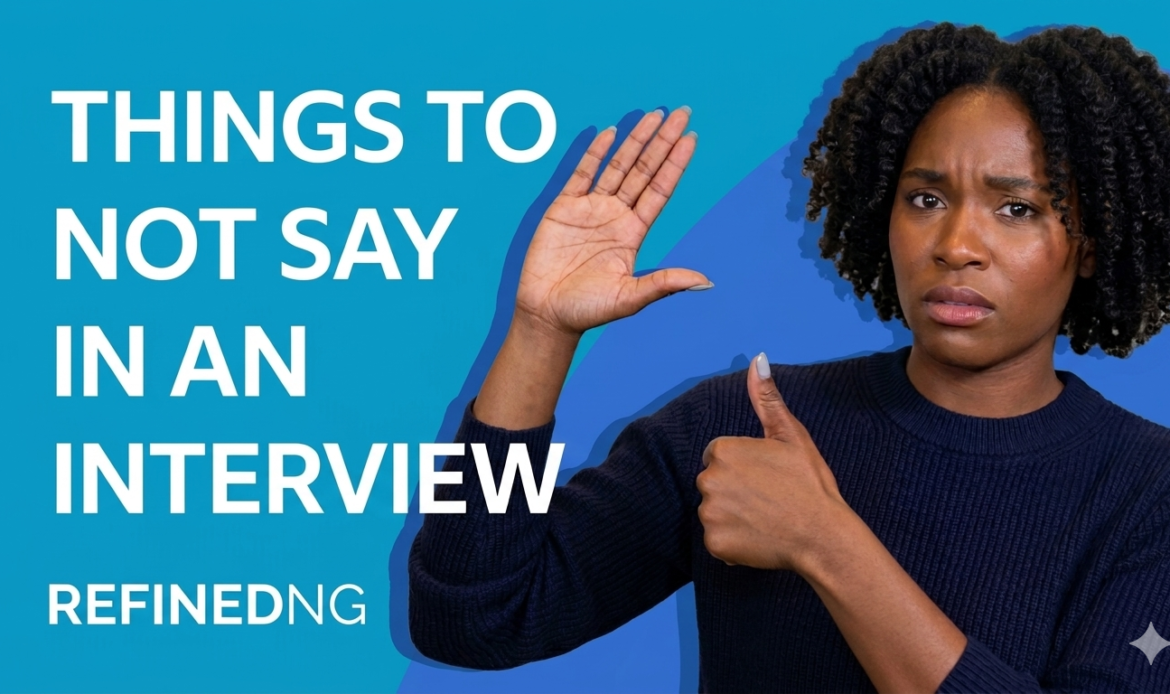
Interviews are not just about what you know. In most industries today, hiring managers are assessing something more subtle: judgment, emotional intelligence, and how you might behave inside a team under pressure.
That is why some answers, even when they sound honest or harmless, can quietly end your chances. Across hiring platforms like Indeed and CNBC Make It, a consistent pattern shows up: strong candidates often lose roles not because of skill gaps, but because of avoidable communication mistakes.
Here are five answers you should avoid in an interview and what to say instead if you want to stay in the running.
1. Speaking negatively about a previous employer or boss
This is one of the fastest ways to damage credibility. Across roles, marketing, banking, engineering, or media, employers are listening for one thing here: professionalism under pressure.
Even if your experience was genuinely difficult, turning the interview into a complaint session can signal emotional bias or difficulty working with others. Hiring managers don’t just evaluate what happened; they evaluate how you interpret it.
A better approach is to stay forward-looking. Frame your response around growth, direction, or what you’re seeking next. For example, you can highlight wanting a more collaborative environment or a role better aligned with your long-term goals.
This keeps the tone professional and shows maturity.
Read: Top 5 Ways to Answer the Interview Question: “Why Are You Leaving Your Current Job?”
2. “I don’t have any questions”
This answer is more damaging than most candidates realise. In fields like consulting, tech, media, and even entry-level corporate roles, asking questions signals curiosity and critical thinking.
Saying you have none can suggest a lack of preparation or disengagement. It also removes your opportunity to evaluate whether the role is right for you. Instead, ask thoughtful, role-specific questions. For example: What are the team’s top priorities in the next quarter? What does success look like in the first 90 days?
These shift perception immediately; you go from passive candidate to active thinker.
3. “My biggest weakness is that I’m a perfectionist”
This has become one of the most overused interview lines. Recruiters recognise it instantly as a rehearsed answer, not genuine self-reflection. The issue isn’t the weakness itself; it’s that it avoids honesty. Interviewers want real awareness, not polished clichés.
A stronger approach is to mention a real but non-core skill gap, then show how you’re improving it. For example, learning to delegate better, improving time management under pressure, or building confidence in presentations.
What matters is not the weakness, it’s your ability to recognise it and act on it.
4. Asking about salary too early
Salary is important in every industry, from startups to multinational corporations. But timing matters. Bringing up compensation too early can signal that money is your primary motivation. In many hiring processes, employers first want to understand your value, fit, and potential contribution before discussing pay.
Instead, focus early conversations on growth and structure. Ask about career progression, performance expectations, or how success is measured in the role.
This shows you are thinking long-term, not just about entry-level benefits.
Read: Tips for Self-Introductions During an Interview
5. “I don’t know” when faced with a tough question
No candidate knows everything, especially in technical or fast-evolving fields like software engineering, data analysis, or consulting. The issue is not uncertainty; it is how you handle it.
Saying “I don’t know” outright can sound like a lack of preparation or problem-solving ability.
A stronger response is to walk through your thinking. Even if you haven’t encountered the exact scenario, explain how you would approach it using similar experience or logical steps.
This demonstrates adaptability, which is often more valuable than having the perfect answer.
What strong candidates do differently
Across industries, hiring is shifting away from memorised answers toward mindset and communication style. Employers want people who are self-aware, curious, and intentional in how they respond.
If your answers show clarity, growth, and structured thinking, you are already ahead of most candidates. And if you want to refine your voice, improve your career positioning, and access more insights like this, explore RefinedNG.