
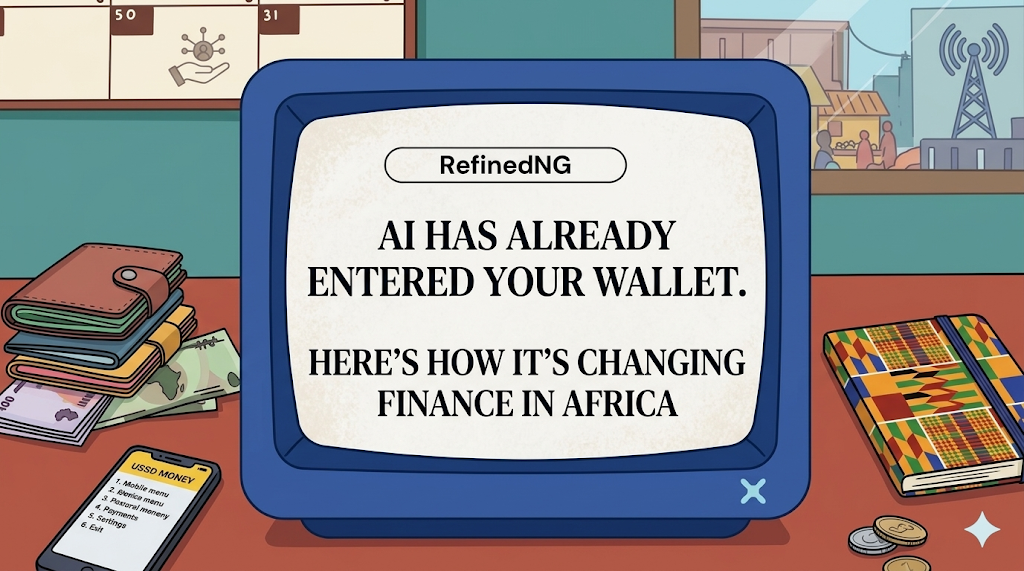
A few years ago, artificial intelligence (AI) felt like a concept reserved for science fiction or Silicon Valley tech companies. Today, it has become part of everyday life across Africa. Every time a bank flags a suspicious transaction, a loan app approves a borrower within minutes, or a chatbot answers customer questions at midnight, AI is likely at work behind the scenes.
The World Economic Forum has described AI as a technology that is shifting financial services from reactive to predictive. Instead of simply responding to customer needs, financial institutions can now anticipate them. Across Africa, where digital banking and fintech adoption continue to grow rapidly, this shift could reshape how people save, borrow, invest, and protect their money.
AI Is Making Financial Services Faster and Smarter
One of the biggest impacts of AI is speed. Traditional banking processes often involved paperwork, manual reviews, and long waiting periods. Opening an account, verifying identity, or applying for a loan could take days or even weeks.
Today, AI-powered systems can analyse documents, verify customer information, and process applications much faster. Many digital banks and fintech companies across Africa now provide near-instant account creation and quicker loan decisions because much of the work is automated.
Customer service has also changed significantly. AI-driven chatbots and virtual assistants can answer common questions, guide customers through transactions, and provide support around the clock. While human staff still handle more complex issues, AI allows financial institutions to serve more people without significantly increasing operating costs.
For customers, the biggest advantage is convenience. Banking is becoming more about accessing services whenever and wherever they are needed.
Read: 5 Reasons You Should Conduct a Mid-Year Audit
AI Is Changing How Banks Decide Who Gets Credit
One of Africa’s long-standing financial challenges has been access to credit. Millions of people have stable incomes and healthy financial habits but lack the formal credit histories that traditional lenders often require.
AI is helping to change that. Instead of relying solely on conventional financial records, AI models can analyse a wider range of information, including transaction patterns, repayment behaviour, mobile money usage, and other digital financial activities. This gives lenders a broader picture of a customer’s financial reliability.
For small business owners, freelancers, and individuals working in the informal economy, this approach could expand access to financing that was previously out of reach.
However, experts also caution that AI should support responsible lending rather than encourage excessive borrowing. Financial institutions must ensure that automated decisions are transparent, fair, and free from unnecessary bias. As AI becomes more common in lending, regulators across Africa will play an important role in setting standards that protect consumers.
Fighting Financial Fraud Has Become an AI Job
Financial fraud remains one of the biggest challenges facing banks, fintechs, and payment platforms. As criminals adopt more sophisticated methods, traditional security systems often struggle to keep up.
AI offers a more proactive approach. Rather than relying on fixed rules, AI systems can analyse millions of transactions in real time and identify unusual patterns that may indicate fraud. A transaction from an unfamiliar location, an unusually large withdrawal, or suspicious account activity can trigger immediate alerts or temporary blocks for further verification.
AI is also being used to strengthen anti-money laundering efforts and improve identity verification processes. As digital payments and mobile banking continue to expand across Africa, these capabilities will become increasingly important for protecting both consumers and financial institutions.
The goal is not simply to detect fraud after it happens but to stop suspicious activity before significant losses occur.
Read: 5 Things Experts Want You To Know About Credit Scores
The Bigger Opportunity Is Financial Inclusion
The most exciting part of AI in finance may not be faster banking or better fraud detection. It could be the opportunity to bring more Africans into the formal financial system.
Lower operating costs allow banks and fintechs to reach underserved communities that may not have access to physical branches. AI can help design personalised savings products, improve lending for small businesses, and create financial solutions tailored to different customer needs.
Yet, technology alone is not enough. Questions around data privacy, cybersecurity, and ethical AI use must remain part of the conversation. Trust will be just as important as innovation.
The future of African finance is unlikely to be defined by AI replacing people. Instead, AI will increasingly work alongside human expertise to make financial services faster, safer, and more accessible.
For more practical financial literacy insights and emerging business trends shaping Africa, follow RefinedNG as we simplify the ideas influencing the future of money and enterprise.