
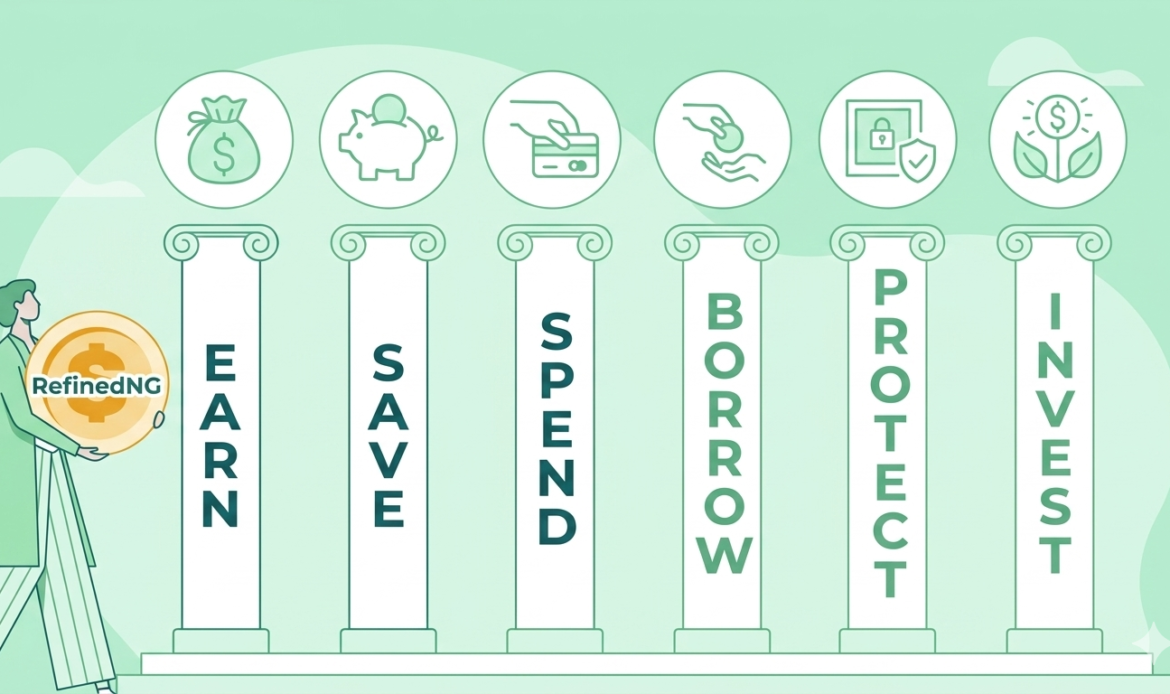
Everywhere you turn, there’s advice on how to “handle your money better”. Save more. Invest early. Cut expenses. Build multiple income streams. It sounds helpful, but if we’re being honest, it can also feel scattered. You’re picking tips from different places, trying to apply them, yet your finances still don’t feel fully in control.
That’s because financial literacy isn’t about random tips. It’s about understanding structure.
At its core, managing money well comes down to four key pillars. Think of them as the foundation holding everything together. If one is weak, the entire system feels unstable. But when you understand how they work and how they connect, money stops feeling confusing and starts feeling manageable.
Here are the 4 pillars of financial literacy.
Pillar 1: Budgeting: The Foundation of Every Financial Decision
Budgeting is where everything begins. It is simply knowing how much money comes in and how much goes out, but its impact goes far beyond that.
A lot of people avoid budgeting because it sounds restrictive, like you’re putting yourself on punishment. But in reality, budgeting gives you control. Without it, money just moves. You earn, you spend, and at the end of the month, you’re wondering where everything went.
When you budget, you start making intentional decisions. You know how much you can spend on rent, food, transport, and even enjoyment without feeling guilty or stressed. It also helps you identify small leaks that drain your money: subscriptions, impulse buys, and unnecessary upgrades.
Whether you earn a salary, run a business, or hustle multiple streams, budgeting is your financial control centre. If you don’t track it, you can’t manage it. And if you can’t manage it, it will always feel like money is slipping through your hands.
Read: 7 Everyday Activities That Teach Kids About Money
Pillar 2: Saving: Your Financial Safety Net
Saving is often misunderstood as just “keeping money aside,” but it is much more than that. It is your protection against life’s unpredictability.
Unexpected expenses are not rare events. They are part of real life. Medical bills, urgent travel, repairs, or even a sudden loss of income can happen at any time. Without savings, these situations push people into panic or debt.
That’s where an emergency fund comes in. It gives you breathing space. It allows you to handle situations without completely disrupting your financial stability.
The key to saving is not how much you start with, but how consistent you are. Even small amounts, saved regularly, build over time. More importantly, saving creates peace of mind. It reduces financial anxiety because you know you have a backup plan.
Saving is less about restriction, but more about security.
Pillar 3: Debt and Credit: Understanding Borrowed Money
Debt is one of the most misunderstood parts of personal finance. At its simplest, it is money you borrow and are expected to repay. But not all debt is the same.
Some debt can help you grow. For example, borrowing to invest in education, a business, or something that increases your earning potential can be considered useful. On the other hand, borrowing to fund lifestyle expenses, things that don’t generate value, often creates long-term pressure.
This is where understanding credit becomes important. Credit is essentially your financial reputation. It reflects how responsibly you handle borrowed money. If you consistently repay on time, your credibility improves. If not, it affects your ability to access opportunities in the future.
Many people don’t realise that poor debt habits today can limit their options tomorrow. Loans become harder to access, interest rates increase, and financial flexibility decreases.
Managing debt is not just about avoiding it completely. It is about using it wisely and understanding the cost that comes with it.
Read: 5 Signs Your Finances Are Not as Healthy as You Think
Pillar 4: Investing: Making Money Work for You
If budgeting helps you control money and saving helps you protect it, investing is what helps you grow it.
Saving alone is not enough in the long run because of inflation. Over time, the value of money decreases, which means what you save today may not have the same purchasing power in the future.
Investing allows your money to increase in value over time. Whether it is through stocks, businesses, mutual funds, or other assets, the goal is to put your money in places where it can grow.
The earlier you start, the better. This is because investing benefits from time. Growth compounds, meaning your money earns returns, and those returns also start earning.
It is important to understand that investing is not about quick wins. It is about patience, consistency, and long-term thinking. This is where real wealth is built.
Putting It All Together
The four pillars of financial literacy are not separate ideas. They work together.
Budgeting helps you control your money. Saving protects you. Debt and credit shape your financial reputation. Investing grows your wealth.
You don’t have to master everything at once. What matters is understanding how each pillar fits into your financial life and starting where you are. If you’ve been jumping from one money tip to another without seeing real change, this is your reset point.
Which of these pillars do you think you’ve been neglecting the most, and what’s one small step you can take to fix it?
Follow RefinedNG for more financial literacy tips.