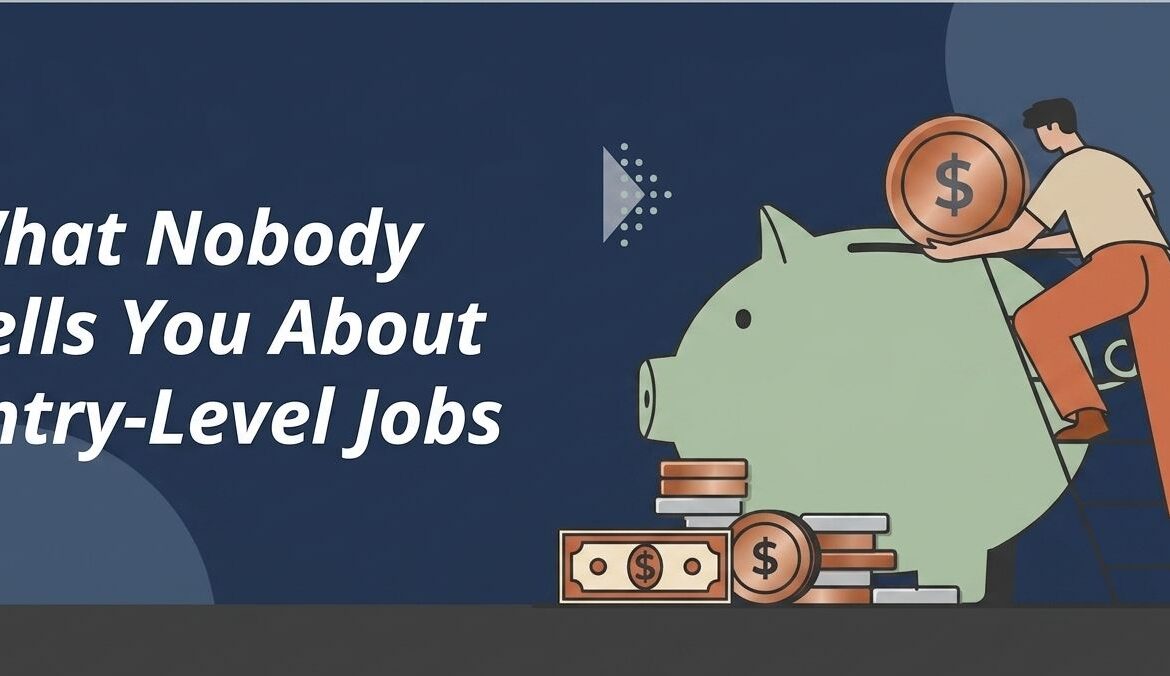
Everyone talks about getting your first job. Very few people talk about what happens after you get it. You finally land that “entry-level” role, maybe as an assistant, intern, or trainee, and you expect structure, guidance, and a clear path forward. Instead, you’re figuring things out on the fly, handling more than your job description, and wondering if this is how it’s meant to be.
The truth? Entry-level jobs are not always what they look like on paper. But once you understand how they really work, you can move smarter and make better decisions early.
Entry-Level Doesn’t Always Mean “Beginner-Friendly”
On paper, entry-level roles are designed for people with little or no experience. In reality, many employers expect you to already know something.
It’s common to see job listings asking for one to three years of experience for roles labelled “entry-level.” The reason is simple: companies want to reduce training time and hire people who can contribute quickly.
This means you need to rethink what counts as experience. Academic projects, internships, volunteering, freelance work, or even managing a small business all matter. When you start presenting these as real experience, you position yourself as more prepared than you think.
Read: The Benefits of Volunteering as a Student
You’ll Probably Do More Than Your Job Description

One of the first realities you’ll face is that your job description is rarely fixed. You might be hired for one role but end up handling multiple responsibilities. In smaller organisations especially, roles overlap, and flexibility is expected.
While this can feel overwhelming at first, it also gives you an advantage. You’re not just doing tasks, you’re building a range of skills like communication, problem-solving, time management, and adaptability.
The key is to stay intentional. Don’t just work, observe what you’re learning. That shift in mindset turns extra responsibilities into valuable experience you can use later.
Salary Might Not Match Expectations, At First
Let’s be honest: entry-level salaries are not always impressive. For many roles, especially outside high-demand industries, the pay can feel underwhelming. This can be difficult to accept, particularly after investing years in education.
However, your first job is often more about positioning than immediate earnings.That doesn’t mean settling for less indefinitely. It means being strategic. Ask yourself: are you gaining relevant skills? Are you building experience you can leverage within a year? Is this role opening doors?
If the answer is yes, then the job is serving a purpose, even if the salary isn’t ideal yet.
Growth Is Not Automatic, You Have to Drive It

A common assumption is that growth will happen naturally once you’re employed. In reality, that’s not always the case. In many organisations, progression is not structured. Without intention, you could remain in the same position longer than expected.
You have to take ownership of your growth. Build skills beyond your daily tasks, ask questions, take initiative, and keep track of your contributions.
Also, assess your environment. Some workplaces invest in development, while others don’t. Knowing the difference early helps you decide whether to stay or start planning your next move.
Read: Should You Set Boundaries at Work: Yes or No?
Networking Might Matter More Than Your CV
Skills and qualifications matter, but relationships can influence your career just as much.The people you meet at work, colleagues, supervisors, clients, can become valuable connections. They can recommend you, refer you, or open doors you didn’t even know existed.
Networking doesn’t have to feel forced. It starts with doing your job well, being reliable, and maintaining good relationships. Staying in touch after roles or projects also makes a difference.
Your first job is not just about work. It’s also about building a network that can support your next step.
Seeing Your First Job for What It Really Is
Entry-level jobs can feel unclear at first. Expectations may be inconsistent, and the rewards may not come immediately. But once you understand how things work, you start making more informed decisions. You begin to see your first role as more than just a paycheck, it becomes a foundation for growth.
Approach it with intention, and you’ll set yourself up for better opportunities ahead.What has your entry-level experience been like or what are you expecting going into one? Share your thoughts and lessons. Someone else might need that perspective.
For more practical career insights and growth-focused content, stay connected with RefinedNG.