For many Africans, switching between languages during a conversation is second nature. A doctor may explain a diagnosis in English and reassure a patient in Swahili, while a customer discussing a loan may move between Yoruba, English and Nigerian Pidgin in the same sentence.
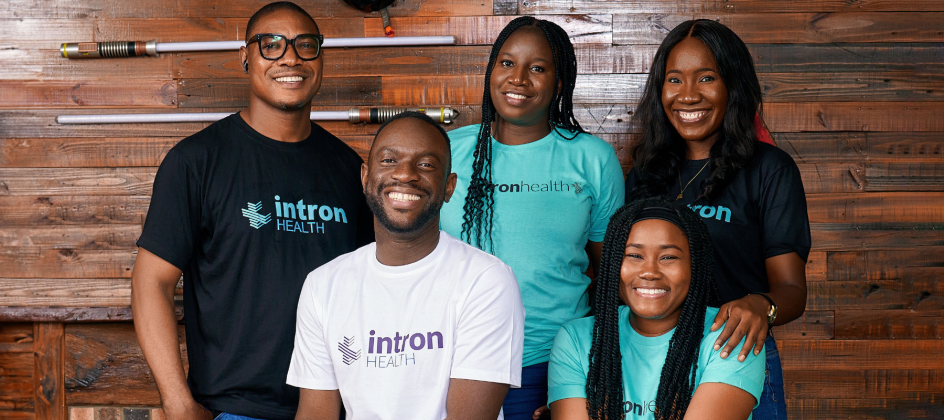
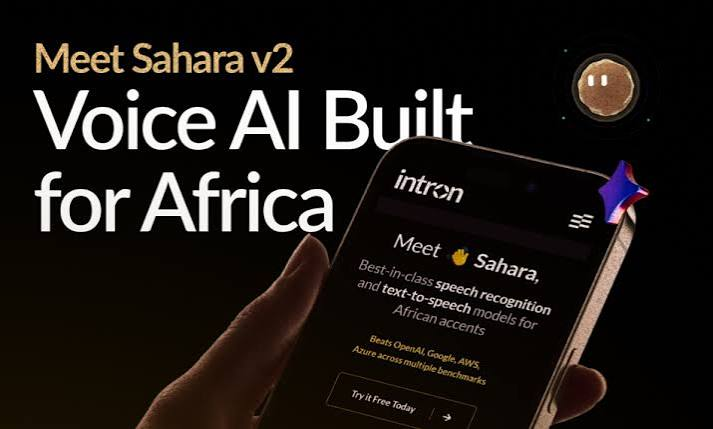
Nigerian voice technology company Intron is building AI that can keep up with those conversations. The company has launched Sahara v2.5, an updated voice AI model designed to understand code-switching across African languages.
The release expands Sahara’s speech recognition capabilities to 31 African languages and introduces bilingual code-switching support for 12 languages, including Hausa, Zulu, Swahili and Luganda.
Read: Nigerian Students Showcase Tech Skills at iCode Competition in China
Sahara v2.5 Targets Africa’s Multilingual Reality
Code-switching presents a particular challenge for voice AI because many mainstream systems work best when users stick to one language at a time. In real conversations, however, that distinction rarely exists.
Intron says Sahara v2.5 can recognise mixed-language speech without forcing users to repeat themselves or change how they communicate. The company’s published benchmarks show the model outperforming Gemini, ElevenLabs and Meta across the 12 languages tested.
The update also introduces what Intron describes as Africa’s first trilingual speech recognition model, supporting Kinyarwanda, English and French. The company says it has filed US patents covering the proprietary technology behind the system.
Sahara’s text-to-speech and voice-agent capabilities now cover 13 languages, while new speech recognition support for Nope, Kanuri, Nigerian Fulfulde, Tigrinya, Kikuyu, Dholuo and Somali takes its overall language coverage to 31.
On word error rate, a standard measure of speech recognition accuracy, Intron reports an average of 34.3 per cent across 12 languages, compared with 53.8 per cent for Gemini 3.6. That represents a 36 per cent relative reduction in errors, according to the company.
The technology has also received external testing. Intron says testing commissioned by the Gates Foundation and CLEAR Global placed Sahara ahead in five of seven Nigerian languages evaluated against Gemini and Meta’s Omnilingual model.
From Voice Recognition to Real-World Applications
The technology is already being used by organisations across sectors, giving the language capabilities a practical role beyond demonstrations.
At fintech lender Branch International, Intron says Sahara-powered collections agents recovered more than ₦1.2 million in delinquent loans within one week. The system also recorded after-hours and weekend repayments and outperformed human agents on loans overdue by more than 356 days, according to the company.
The Ogun State Judiciary has expanded its use of Intron’s transcription technology from a pilot court to nine courts. The company says the technology has reduced proceedings that previously took about four hours to around half that time, with plans to extend deployment to all 18 high courts in the state.
Healthcare is another area where the technology is making a practical difference. In Nairobi, Intron says a 14-minute Swahili-English doctor-patient consultation can be converted into a structured clinical note in less than 30 seconds.
Sahara has also been deployed offline on Nvidia hardware at PAMO Clinics in Port Harcourt through a donor-funded project. The approach can support institutions where connectivity or regulatory requirements make cloud-based AI difficult to use.
Read: Africa’s Largest Employers of Labour: The 5 Companies With the Biggest Workforces
Building Voice AI Around African Languages
For Intron CEO Tobi Olatunji, the focus on code-switching comes directly from what customers encounter when deploying voice AI in real environments.
‘Code-switching was one of the biggest problems that consistently came up for clients deploying real-world voice AI,’ Olatunji said. He added that Africa needs AI that works with how Africans naturally communicate.
That approach is backed by a growing body of African-language data. Intron says it has built a training dataset containing more than 150,000 hours of African-language audio from over 53,000 speakers, covering 64 languages and more than 500 accents.
The company currently serves more than 40 enterprise customers across Nigeria, Kenya, South Africa, Uganda, Rwanda and Ghana. It has also raised $1.6 million in pre-seed funding since 2024 to support its development and expansion.
Sahara v2.5 points to a wider shift in African technology, where local language, context and communication patterns are becoming important parts of how AI products are designed. As more businesses adopt voice interfaces, models that understand the way people actually speak could make digital services more accessible across the continent.
Follow RefinedNG for more stories on African startups, technology and the innovators building solutions for the continent.