
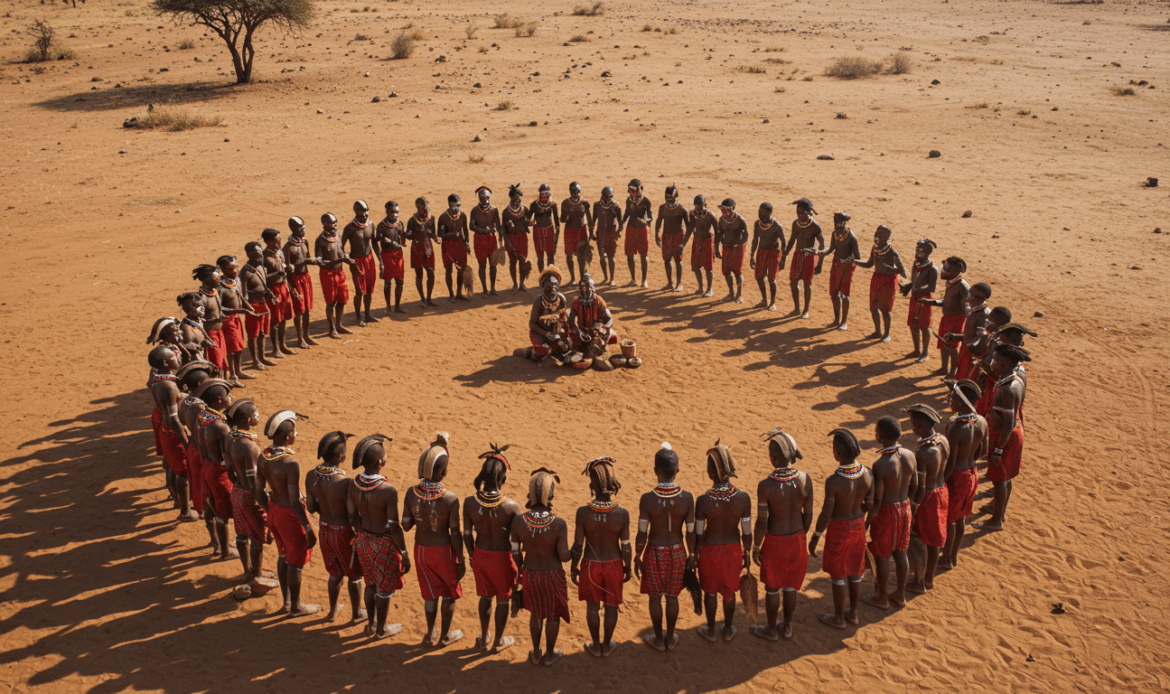
In ancient Africa, ritual was not an event—it was a rhythm. A pulse that aligned the daily with the divine. For centuries, across thousands of tribes and nations, rituals shaped every layer of African life. They guided births, marked transitions, summoned rain, honored the dead, crowned kings, and healed the sick. These weren’t optional customs—they were frameworks of belief, duty, and meaning.
But as colonization reshaped borders, foreign religions arrived, and societies urbanized, many of these once-sacred traditions faded. Some were demonized. Others were forgotten. And yet, they remain etched in memory—spoken about in hushed tones by elders, documented in anthropological texts, and slowly being revived by a new generation of Africans seeking to reconnect with ancestral roots.
This is not merely a look at lost rituals. It is a meditation on what they meant, what they gave us, and why reclaiming them matters now more than ever.
Rituals of Passage: Marking Life’s Sacred Transition
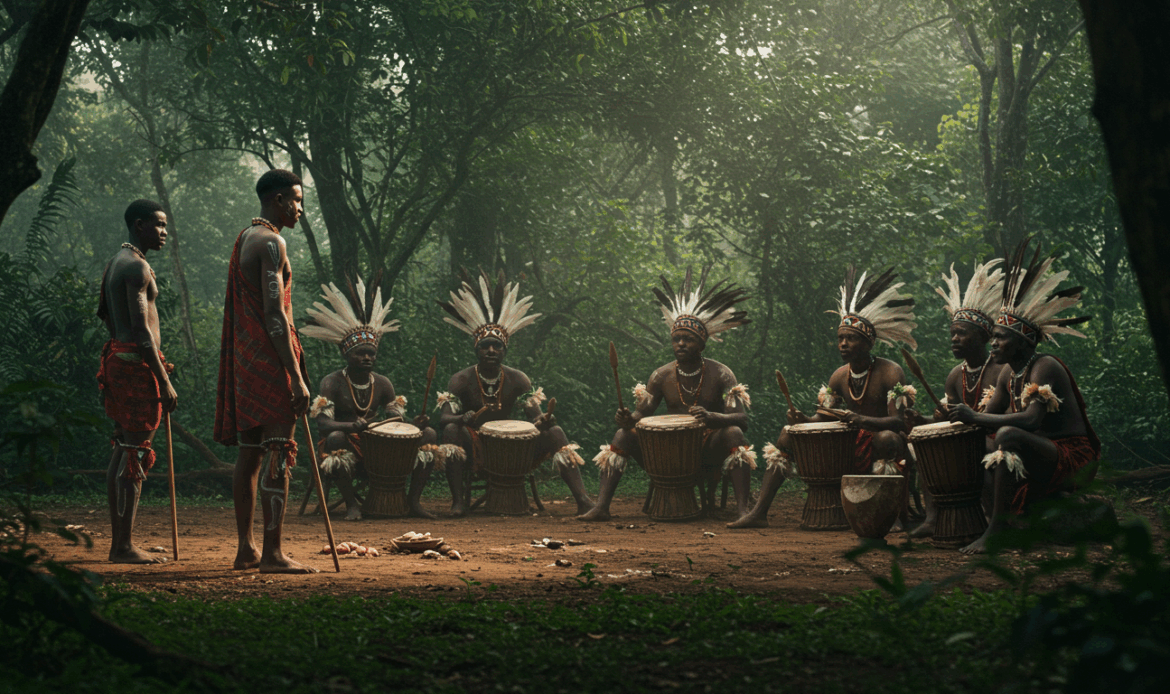
In many traditional African societies, life was divided into distinct phases, and each transition was honored through ritual. These weren’t just symbolic gestures; they were structured processes that taught individuals their place in the world.
Among the Zulu people of South Africa, the Imbeleko ceremony was performed to welcome a newborn into the community. This involved the slaughtering of a goat and a naming ceremony that not only identified the child but linked them to the spirit of their ancestors. Through prayers and offerings, the family introduced the baby to those who had come before, ensuring protection and belonging from the very start of life.
In Mali, the Dogon people initiated adolescent boys through the Toguna, a low-ceilinged hut where wisdom was passed from elder to youth. The hut’s design required the boys to sit in humility, reinforcing that knowledge must be received with reverence. Within these dim, sacred spaces, boys learned not only tribal laws but the cosmological beliefs that governed their people’s worldview.
Such rituals didn’t simply mark change—they prepared individuals for it. They imbued identity with spiritual gravity, reminding the initiated that life was not a solo journey, but one tethered to a lineage and a communal soul.
Read: Key Medicinal Plants in West African Healing Traditions
Rituals of Nature: Living in Harmony With the Earth
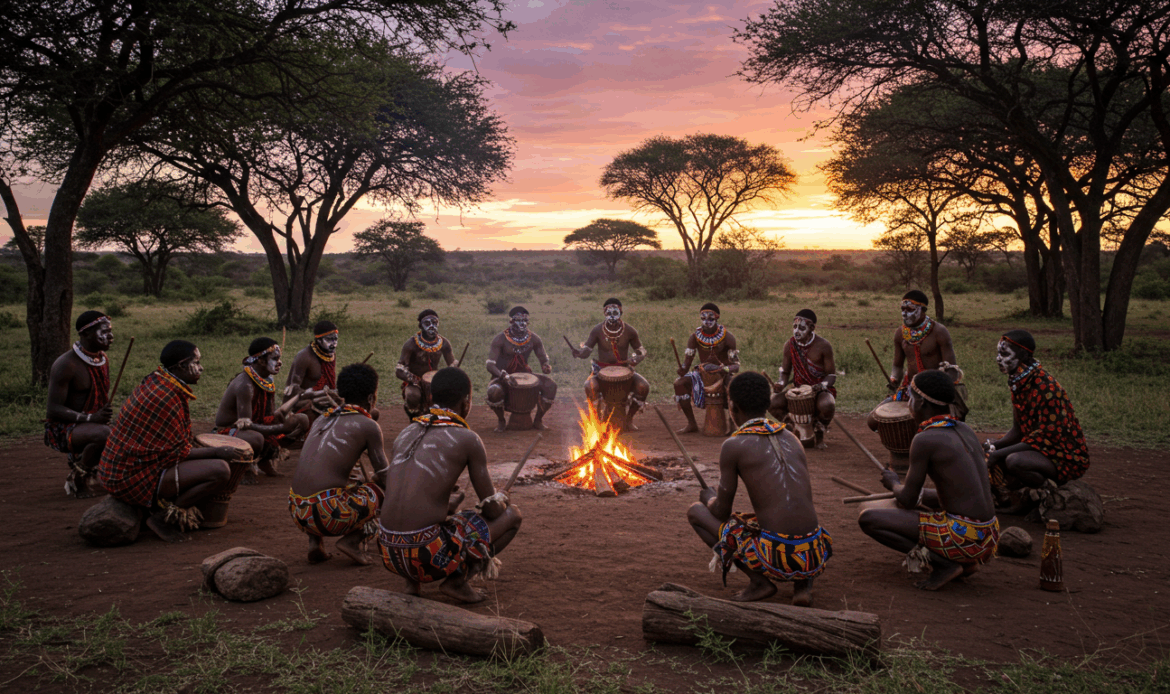
Before agriculture became industrial, African communities relied on spiritual and environmental harmony to guide their farming and survival. Rituals were used to interpret nature’s moods and ask for her blessings.
Across Southern Africa, rainmaking ceremonies were common among groups like the Zulu, Tswana, and Shona. During periods of drought, communities would gather around sacred hills or rivers. Spiritual leaders—often women with ancestral gifts—would lead prayers, songs, and dances designed to invoke ancestral spirits and ask for rain. These were not desperate gestures; they were ancient contracts between humans and the natural world. By honoring the spirits, the land would be nourished.
In Tanzania, the Nyamwezi people followed the phases of the moon to mark their agricultural rituals. At full moon, families gathered for a harvest dance, accompanied by offerings of food and drink to the ancestors. The moon wasn’t just a celestial object—it was a clock, a god, and a guardian. Through this lunar connection, farmers understood when to sow, reap, and rest.
Modern climate science and agricultural technology have largely replaced these traditions. But the spiritual relationship between people and land—a relationship of gratitude, reciprocity, and reverence—is something the modern world sorely lacks.
Rituals of Remembrance: Honoring the Dead as the Living

In African belief systems, death is not an end but a beginning—a transformation. The deceased become ancestors, and their favor or disfavor can deeply affect the living. Rituals were essential for maintaining this delicate bridge between the two worlds.
The Yoruba Egungun festival is a powerful expression of this philosophy. During the festival, masked dancers believed to be possessed by ancestral spirits emerge from sacred groves and parade through the community. These spirits bless homes, warn of social discord, and offer guidance. The community treats them with awe and respect, for they are not just performers—they are the past made present.
Among the Kwerba people of Cameroon, the death of a person triggered a series of spirit drumming rituals. Using large wooden drums, musicians played coded rhythms to announce the soul’s departure. The drumming called upon the spirit world to receive the deceased and comfort the grieving family. Each beat told a story, and the language of the drums was understood by all.
Today, funerals in Africa still carry elements of these traditions. But the sacred function—the ritualized dialogue between worlds—is often lost. In its place are hymns, eulogies, and recordings, which, while heartfelt, rarely convey the spiritual gravity that ancestral rites once held.
Rituals of Power: Leadership and Cosmic Legitimacy
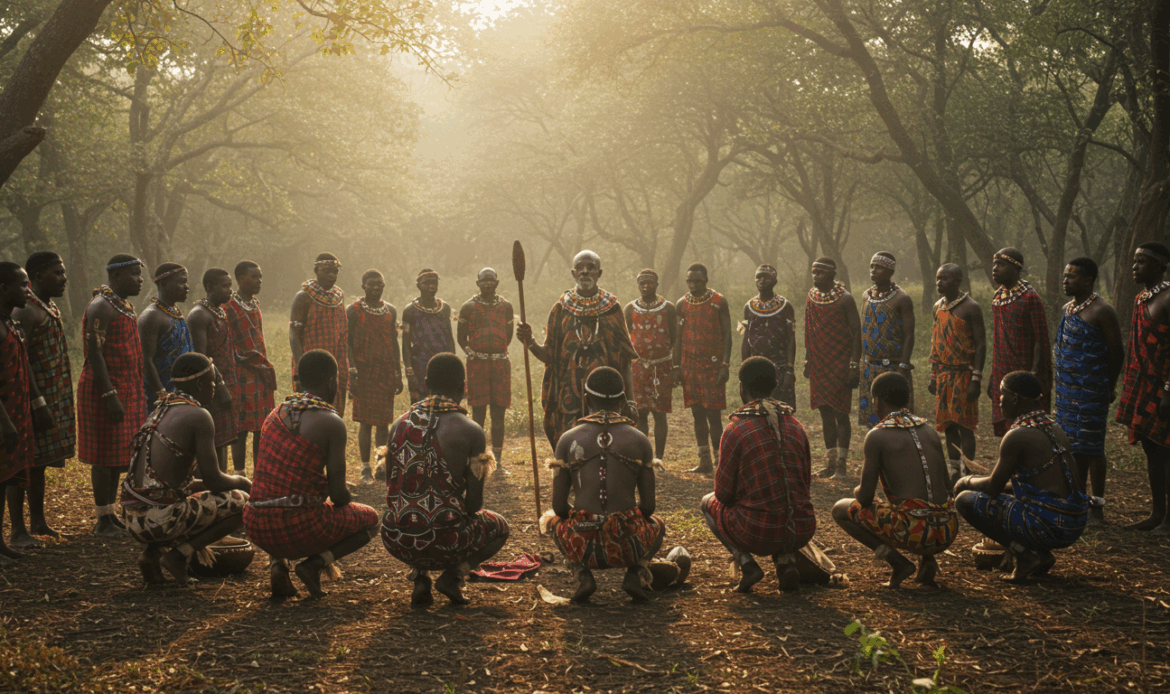
In traditional African societies, leadership was not just political—it was sacred. Kings, chiefs, and elders drew their authority from the spirits. To rule was not to dominate, but to serve as a vessel of cosmic balance.
The Ashanti of Ghana recognized this through the Black Stool ritual. The stool, made of wood and imbued with ancestral power, symbolized the soul of the nation. No king could be crowned without first communing with the stool. He would be secluded, purified, and ritually bound to the ancestors. Leadership, in this context, was not a title but a covenant.
In Ethiopia, the Hamar people practiced a rite of passage for young men involving the bull-leap ceremony. Before a man could marry or gain social standing, he had to leap across a line of bulls in front of his kin. The act signified courage, maturity, and readiness to protect. The community would celebrate with days of feasting and dance.
These rituals have largely faded or been repurposed for tourism. Yet their underlying message—that power must be earned, witnessed, and blessed—remains deeply relevant in today’s world of unchecked authority.
Read: The Significance of Drums in African Tradition
Why These Rituals Still Matter
Though modernity has swept across Africa, creating new ways of life and belief, these lost rituals offer something irreplaceable: meaning. They taught values, preserved memory, and maintained a harmony between people, nature, and spirit.
The erosion of ritual is more than the disappearance of cultural practices. It is the loss of an indigenous worldview—one that prioritized balance, community, reverence, and continuity.
But all is not lost. In recent years, artists, scholars, and spiritual leaders are rediscovering these ceremonies. Museums are recording chants. Schools are inviting elders. And young Africans are reclaiming their past through fashion, music, film, and storytelling.
Technology, ironically, is now helping to preserve what colonization tried to erase.
Ritual as Resistance and Revival
Rituals once whispered the meaning of life into every African village. They turned the ordinary into the sacred. They kept memory alive. And though many have faded, they have not vanished completely.
Across the continent and the diaspora, the drums are beating again—sometimes softly, sometimes loudly. And as we remember these rituals, we are not just honoring the past.
We are building a bridge to the future—one rooted in wisdom, rhythm, and the eternal presence of our ancestors.