

On the night of May 31, 2025, while Paris Saint-Germain soaked in their long-awaited UEFA Champions League triumph, a different kind of celebration quietly unfolded. Among the roaring fans and glittering confetti stood Achraf Hakimi — calm, proud, and deeply connected to a legacy larger than the trophy he had just lifted.
With that historic win, Hakimi didn’t just collect another medal. He became the 27th African player to win Europe’s most prestigious club football title. But this wasn’t just about numbers. It was about history, identity, and the journey of a young boy from Casablanca who grew up chasing dreams most thought were out of reach — and made them real.
The Weight of 26 Legends Before Him
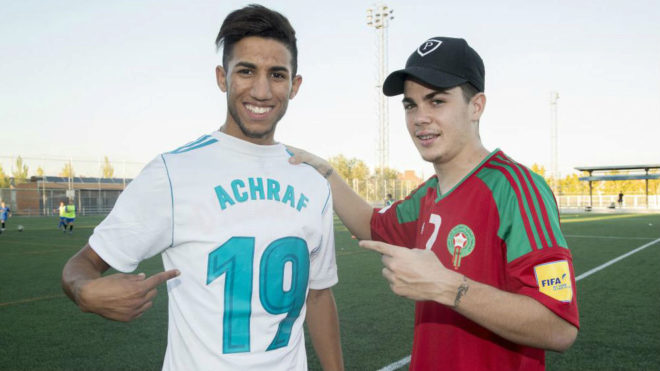
To become the 27th African to win the UEFA Champions League is not just an accomplishment — it’s an inheritance. Achraf Hakimi now walks in the footsteps of giants: Abedi Pele, Samuel Eto’o, Didier Drogba, Yaya Touré, Sadio Mané. These names don’t just represent individual success; they symbolize generations of African footballers who turned global doubt into dazzling dominance.
Yet, what makes Hakimi’s moment particularly poignant is its echo of history. In 1993, Abedi Pele became the first African to win the UCL with a French club, Marseille. More than three decades later, Hakimi repeats the feat — not just lifting the same trophy, but doing it while wearing the colors of another French giant, PSG.
For African fans, this wasn’t just another final. It was a torch being passed. Hakimi’s win validated not only his rise as one of the best full-backs in the world, but also the enduring contribution of African talent to European football’s grandest stages. It reminded the world that Africa doesn’t just produce players — it produces legends.
But Hakimi isn’t just standing on the shoulders of those who came before. He’s carving his own path — one that began in Casablanca and has taken him through Madrid, Milan, Paris, and now into history.
Read: Nigeria Edge Ghana 2–1 to Reach Unity Cup Final
From the Streets of Madrid to the Spirit of Morocco
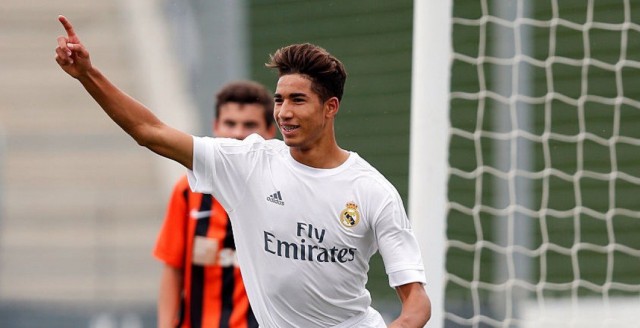
Achraf Hakimi’s journey begins in Getafe, a working-class suburb of Madrid, where the son of Moroccan immigrants chased a ball long before he chased trophies. His father sold goods on the street, his mother cleaned homes. For many families like his, football was a dream too expensive to dream fully. But Hakimi, spotted by scouts while still at a local club, made the leap to Real Madrid’s famed youth academy at just eight years old.
Raised in Spain, Hakimi was immersed in European culture, but Morocco beat in his heart. When the time came to choose a national team, many expected him to follow the path of least resistance—Spain. Instead, he chose Morocco, a bold decision that stunned pundits but electrified a generation. His reasoning wasn’t political—it was personal. It was about heritage, identity, and rewriting the narrative of African football.
Hakimi’s embrace of his Moroccan roots has made him more than just a footballer. He’s become a cultural bridge—between continents, between languages, between histories. In an age of global stars and diluted allegiances, he stood firm: proudly African, proudly Arab, proudly himself. And that decision has defined not only his international career, but his entire legacy.
The First & Second Crowns
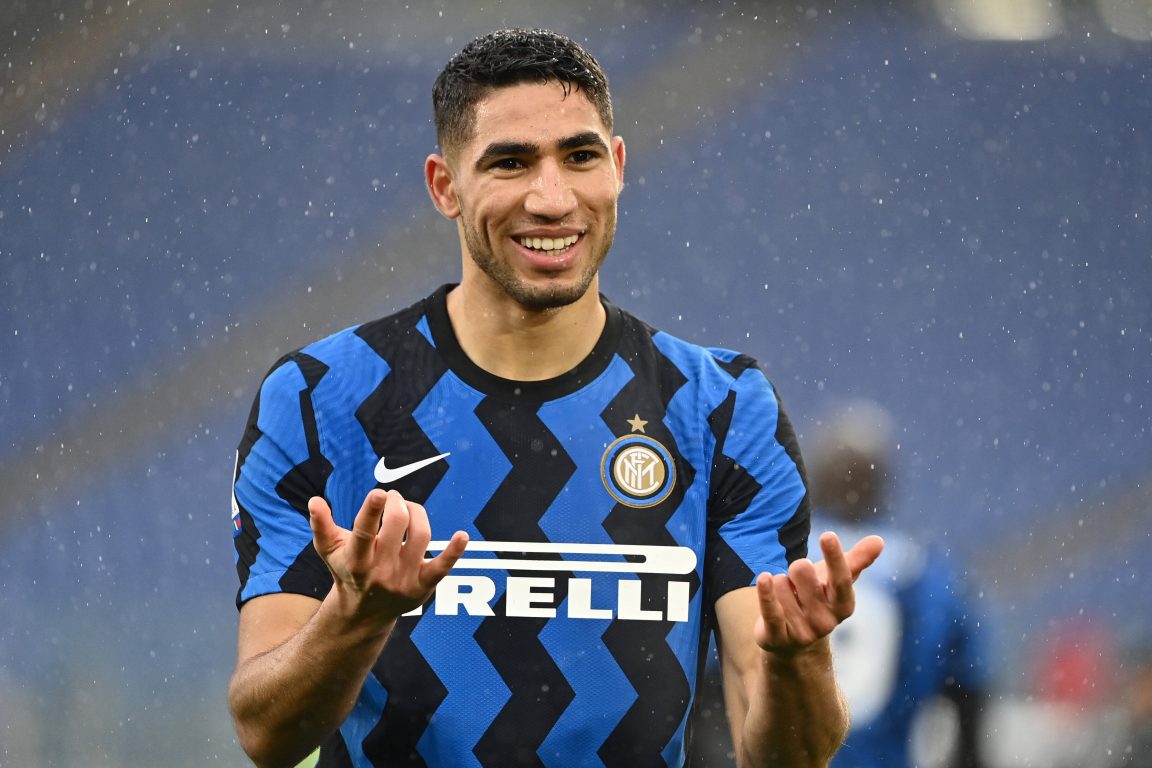
In 2021, Achraf Hakimi helped Inter Milan reclaim the Serie A title, ending Juventus’ decade-long stranglehold on Italian football. It was Inter’s first league crown in 11 years—and Hakimi wasn’t just a passenger. With 7 goals and 10 assists from right wing-back, he was a revelation, slicing through defences with pace, precision, and swagger. For an African player, this wasn’t just another European medal—it was a breakthrough. Hakimi was not only making starting elevens; he was shaping seasons.
Then came the move to Paris Saint-Germain. A €68 million deal and a five-year contract placed him in the galaxy of stars—Messi, Mbappé, Neymar—but Hakimi never dimmed. He won Ligue 1 in his first season and added another in 2023. More than that, he delivered in decisive moments: brace against Metz, clutch strikes in Europe, and leadership when it counted.
Together, those two titles—the Italian and the French—represented more than silverware. They were proof of consistency across systems, cultures, and leagues. In the footballing world, where African players are too often seen as pace merchants or role players, Hakimi stood tall as a system-defining force. He wasn’t just succeeding in Europe—he was owning it.
The Legacy Season (2024/25)
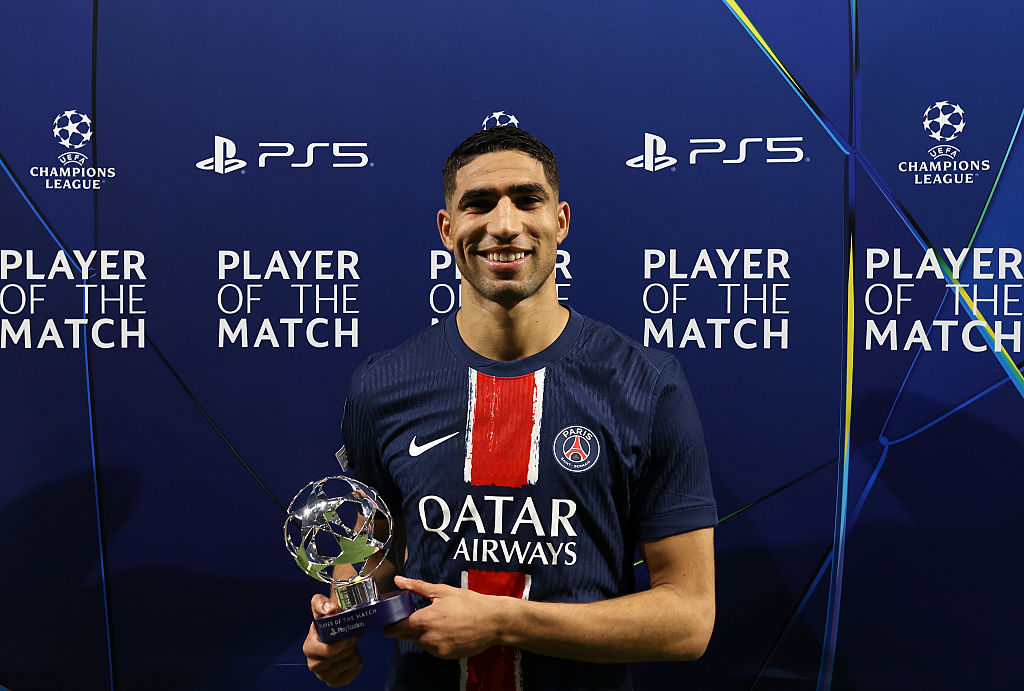
The 2024/25 campaign is no ordinary season for Achraf Hakimi—it’s a coronation. Now in his fourth year at PSG, Hakimi plays with the assurance of a veteran and the hunger of a player with something to prove. At 26, he’s entering his prime not as a rising star but as a leader—trusted, lethal, and influential across every blade of grass.
He extends his contract through 2029 in February, a clear signal that both he and PSG see unfinished business—and that includes Europe’s biggest prize. Hakimi answers the call with a defining run: a goal in the semi-final second leg against Arsenal to punch PSG’s ticket to the Champions League final, another in the Coupe de France final, and then—when it matters most—he scores the opener in a ruthless 5–0 dismantling of Inter Milan. It’s poetic: against his former club, on the biggest stage, Hakimi delivers.
Now a two-time league winner in France, a Scudetto champion in Italy, and a Champions League winner with Real Madrid and PSG, Hakimi cements a rare status: not just a consistent elite performer, but one of the most decorated African full-backs in modern football. His legacy is no longer forming—it’s being etched in stone.
Becoming The 27th UCL Winner
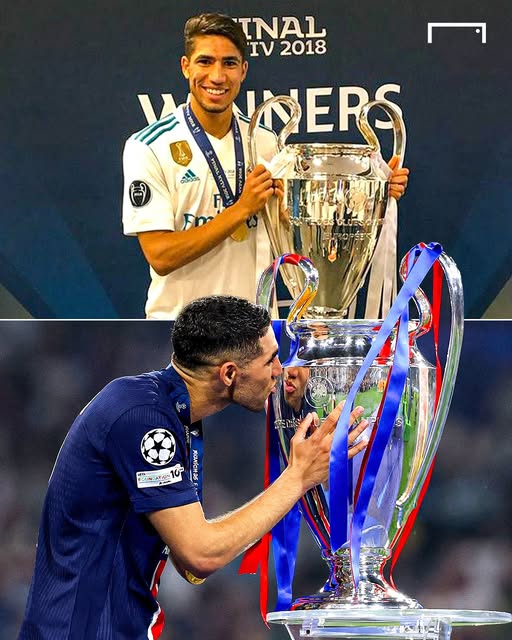
When Achraf Hakimi lifted the UEFA Champions League trophy on May 31, 2025, he didn’t just win for PSG—or even for Morocco. He became the 27th African player in history to win Europe’s most prestigious club title, marking a symbolic milestone for the continent.
For Morocco, it was another chapter in the nation’s footballing renaissance after the 2022 World Cup semifinal run. For Africa, it was a torch-passing moment. Following in the footsteps of legends like Didier Drogba, Samuel Eto’o, and Sadio Mané, Hakimi joined an elite group of African icons who had conquered the European summit. But unlike most on that list, Hakimi achieved it as a right-back—a position historically underrepresented in such triumphs. His win challenged assumptions: that defenders couldn’t define eras, and that African full-backs were footnotes rather than forces. With one raised arm and a medal around his neck, Hakimi rewrote those narratives in real time.
This wasn’t just a number. 27 became a symbol—of endurance, versatility, and generational excellence. In many ways, Hakimi embodied a new African footballing archetype: born in the diaspora, loyal to his heritage, developed through elite academies, and fearlessly world-class.
Read: Nigerian Startup, Carrot Credit, Raises $4.2M for Asset Loans
More Than a Medal
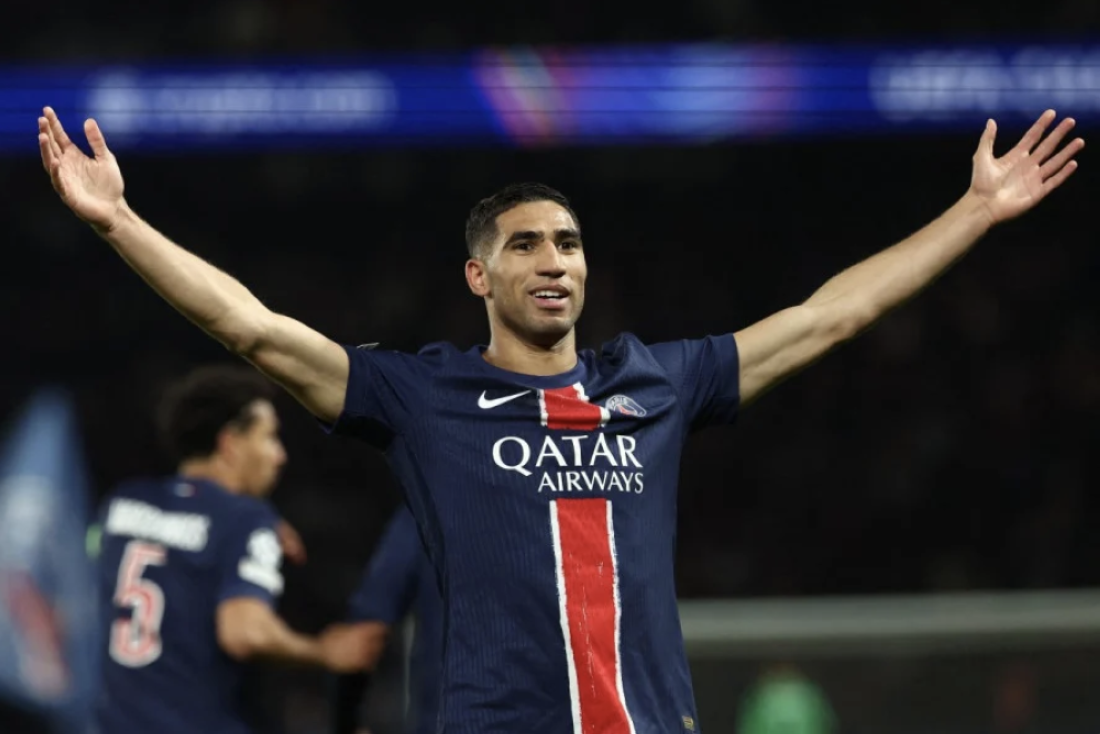
Achraf Hakimi’s 2025 Champions League triumph wasn’t just the pinnacle of a season—it was the culmination of a story that began far from the spotlight. From the working-class streets of Getafe to the grand stages of Dortmund, Milan, Paris, and Doha, Hakimi’s path has always blended grit with grace, speed with precision, and heritage with ambition.
In lifting the Champions League trophy, he did more than fulfill a childhood dream. He carved his name into the annals of both club and continental football—as a trailblazer, a record-breaker, and a symbol of modern African excellence. But if history is anything to go by, this isn’t an ending. It’s a checkpoint. Hakimi’s legacy is still in motion, much like the man himself—constantly running, redefining, and reminding the world that greatness knows no boundaries of geography, position, or expectation.