
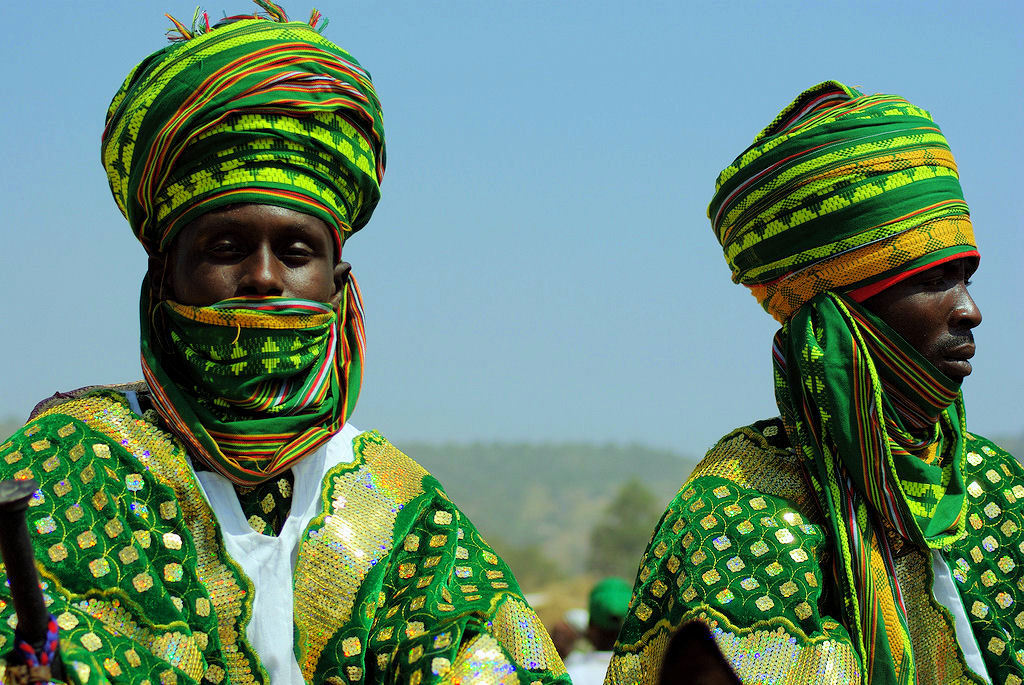
The Hausa people, one of the largest ethnic groups in West Africa, are known for their rich traditions, craftsmanship, and deep sense of community. Spread across northern Nigeria and parts of Niger, their culture has remained vibrant for centuries — shaped by trade, faith, and an enduring respect for heritage.
From the embroidered folds of the Babban Riga to the echo of the Kakaki trumpet at royal ceremonies and the comforting aroma of Tuwo Shinkafa served at family gatherings, Hausa culture speaks through everyday life. Each expression — in dress, music, or food — tells a story of identity, modesty, and pride.
Let’s explore three defining pillars of Hausa life: attire, music, and food. Together, they reveal a people who balance faith with creativity, tradition with adaptation, and continue to share the essence of northern Nigeria with the world.
Read: Hausa Traditional Attire
Dressing with Dignity – Hausa Traditional Attire
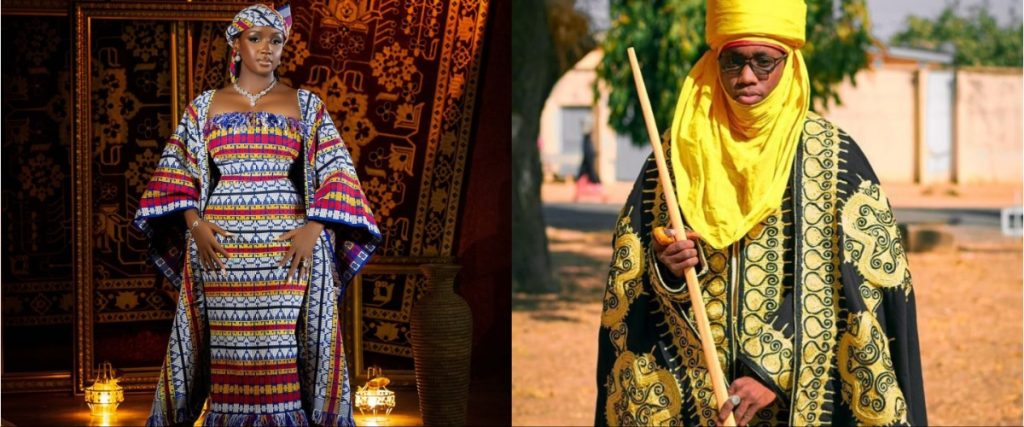
Among the Hausa, dressing is more than fashion. It’s a reflection of faith, modesty, and social identity. Every piece of clothing carries meaning, rooted in Islamic tradition and centuries of craftsmanship.
For men, the Babban Riga stands as the most iconic garment. It’s a large, flowing gown often worn over a Jalabiya or Juanni. Its embroidered neckline, usually handmade, signals elegance and respect. The Babban Riga is worn during prayers, ceremonies, and special occasions, symbolizing dignity and authority. Complementing it is the Hula, a colorful embroidered cap, and in some regions, the Alasho; a long turban wrapped around the head and sometimes over the face, serving both as protection from the sun and a mark of maturity or status.
Hausa women express their cultural identity through equally refined styles. The Zani wrapper, made from richly patterned Atampa fabric, is paired with a blouse and gyale (headscarf) to create a coordinated, graceful look. Jewelry and gold adornments are common, often signifying marital or economic status. Women also decorate their hands and feet with Lalli (henna), a form of temporary body art used for weddings and celebrations.
Through these attires, Hausa men and women uphold modesty while celebrating beauty. The designs may evolve with fashion, but the values behind them — respect, identity, and cultural pride — continue to connect generations across northern Nigeria
The Rhythm of the North – Hausa Music and Instruments
Music in Hausa culture is more than entertainment, it’s a form of storytelling that connects generations, celebrates royalty, and preserves collective memory. For centuries, songs have carried tales of warriors, love, faith, and leadership, turning music into both an archive and a communal language.
Hausa music traditionally falls into two forms. Folk music thrives in rural communities, telling everyday stories and accompanying farming, weddings, or naming ceremonies. Court music, on the other hand, is reserved for royal settings — performed during coronations, festivals, or visits to the emir’s palace.
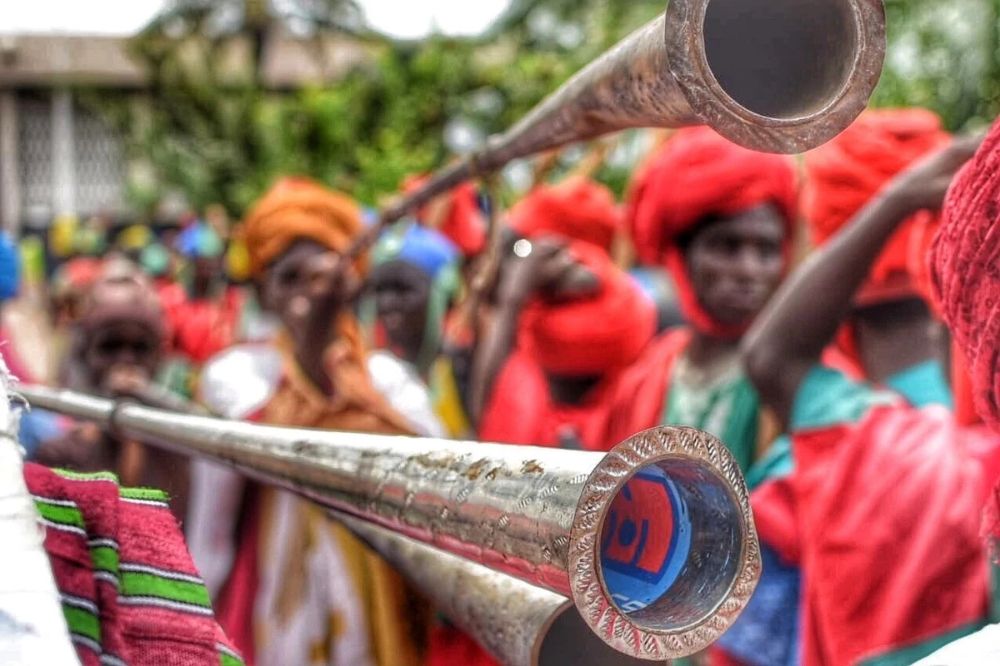
A range of instruments gives Hausa music its unique rhythm and depth. The Kora, a stringed instrument resembling a harp, creates soothing melodies. The Kalimba, or thumb piano, adds soft, percussive tones, while the Talking Drum communicates messages through varying pitches. The Balafon, a wooden xylophone, delivers lively, danceable rhythms, and the Kakaki — a long metal trumpet — announces royal events, played only by men within palace grounds.
Hausa musical traditions have deeply influenced Nigerian and West African sounds, blending with Islamic chants and Sahelian rhythms. Today, modern Hausa artists integrate these roots into contemporary genres like hip-hop and Hausa pop, ensuring that while the beats may change, the soul of the music remains authentically northern.
Read: Some Hausa musical instruments and their names
A Taste of Tradition – Hausa Cuisine
In Hausa culture, food is more than sustenance; it’s a language of hospitality, unity, and identity. Meals are often shared from a common bowl, symbolizing equality and community. Whether at family gatherings, weddings, or religious celebrations, eating together reinforces the bond between people and place.
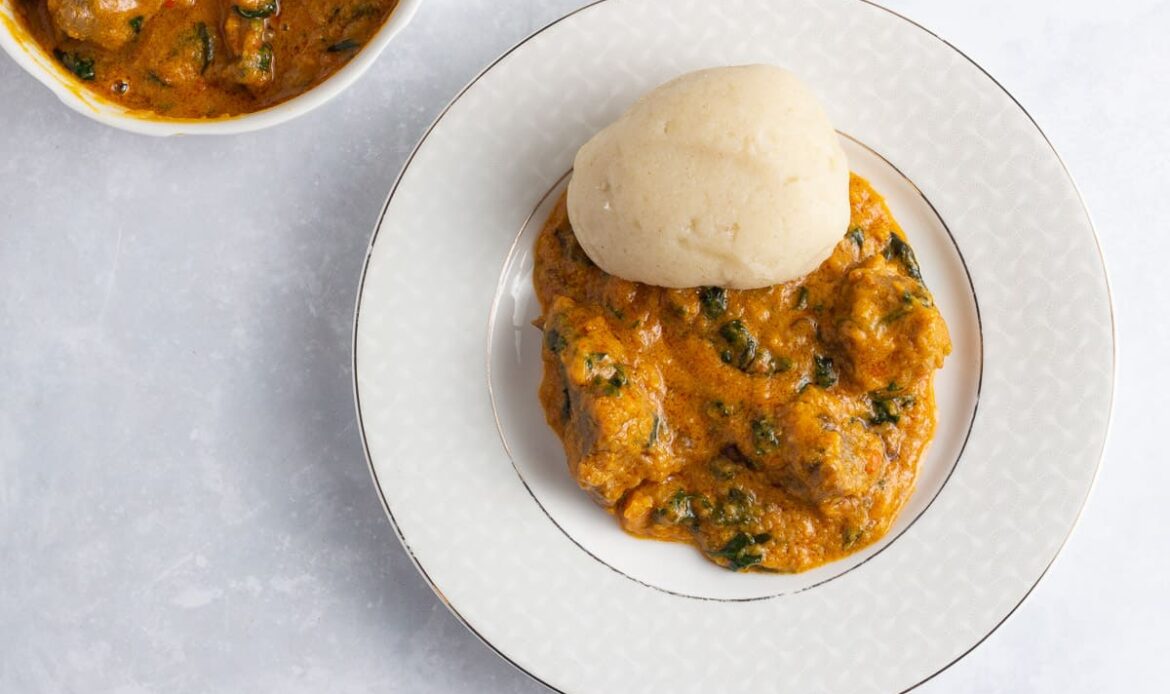
Hausa cuisine is built on simple, wholesome ingredients that reflect the region’s climate and trade history. Staple meals include Tuwo Shinkafa, a soft rice pudding served with rich soups like Miyan Kuka (baobab leaf soup) and Miyan Taushe (pumpkin soup cooked with groundnut and vegetables). Suya, the famous spiced grilled meat, remains one of Nigeria’s most beloved street foods — smoky, peppery, and always shared.
Everyday street foods also carry deep roots: Fura da Nono (a thick millet and milk drink) offers refreshment in the northern heat, while Kosai (bean cake) and Waina (rice pancake) are staples at morning markets and social events.
What sets Hausa cuisine apart is its mild, balanced flavor — a contrast to the fiery southern stews of Nigeria. It blends local crops like millet, sorghum, and rice with spices introduced through centuries of trans-Saharan trade, creating a culinary tradition that feels both ancient and timeless, deeply woven into northern hospitality.
Keeping Tradition Alive – Then and Now
Hausa culture continues to evolve without losing its essence. In today’s world, its presence extends from runways to recording studios, reflecting how tradition adapts to modern expression. Hausa-inspired fashion now graces cultural festivals and global fashion shows, where designers reinterpret the Babban Riga and Zani with new fabrics and cuts.
In music, younger artists are blending traditional sounds, the Kakaki, Kalimba, and talking drums, with Afrobeats and hip-hop, introducing Hausa rhythms to international audiences. Meanwhile, northern delicacies like Suya and Fura da Nono have become cornerstones of culinary tourism, attracting food lovers from within and beyond Nigeria.
What remains constant is the resilience of Hausa identity rooted in faith, family, and artistry. Every generation adds its voice to the rhythm while keeping the melody of heritage intact.
Hausa culture, in its quiet confidence, reminds us that modernity doesn’t erase tradition; it refines it. And through this balance, it continues to shape Nigeria’s cultural heartbeat.
The Northern Essence
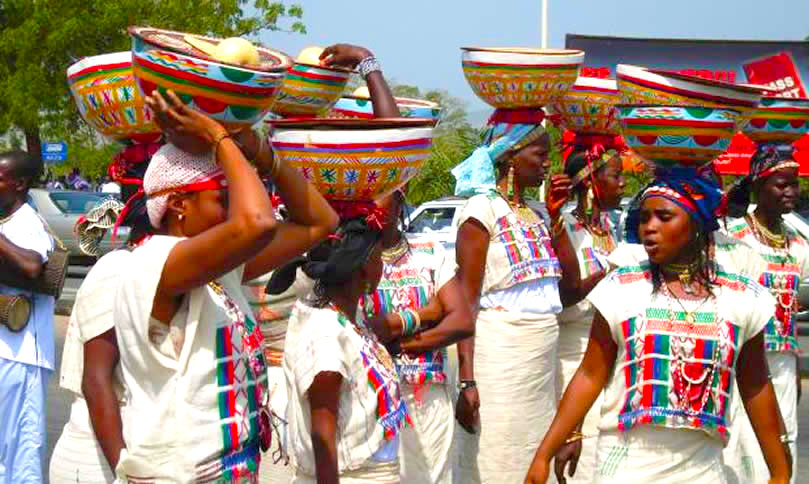
Hausa attire, music, and food are not just cultural elements — they are expressions of community, respect, and spirituality. Each tells a story of people who honor their past while embracing the present.
To experience Hausa culture is to hear the hum of the Kakaki, taste the spice of Suya, and feel the dignity of a Babban Riga swaying in the northern breeze.
For more stories that celebrate Nigeria’s living traditions and evolving heritage, follow RefinedNG — where culture meets contemporary life.