
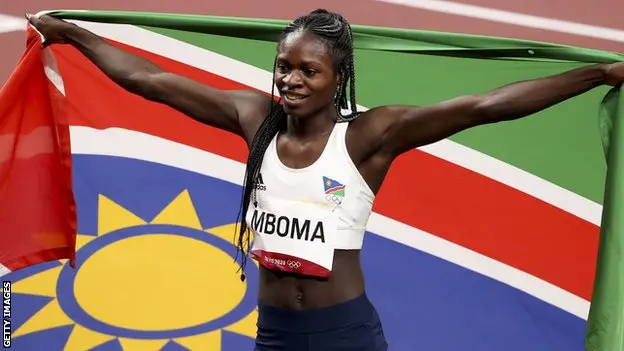
In the blistering heat of Tokyo’s Olympic Stadium, the world watched as a teenage girl from a remote Namibian village charged down lane seven. With powerful strides and an unshakable focus, Christine Mboma crossed the finish line in the women’s 200m final — clocking 21.81 seconds to seize the silver medal.
At just 18 years old, she became the youngest African female Olympic medallist in track and field, and the first Namibian woman ever to reach the podium. But behind the moment was a story of perseverance, controversy, and an unwavering spirit that refused to be outrun. This is not just the tale of a medal — it’s the making of a legacy.
Early Life and Against-the-Odds Beginnings
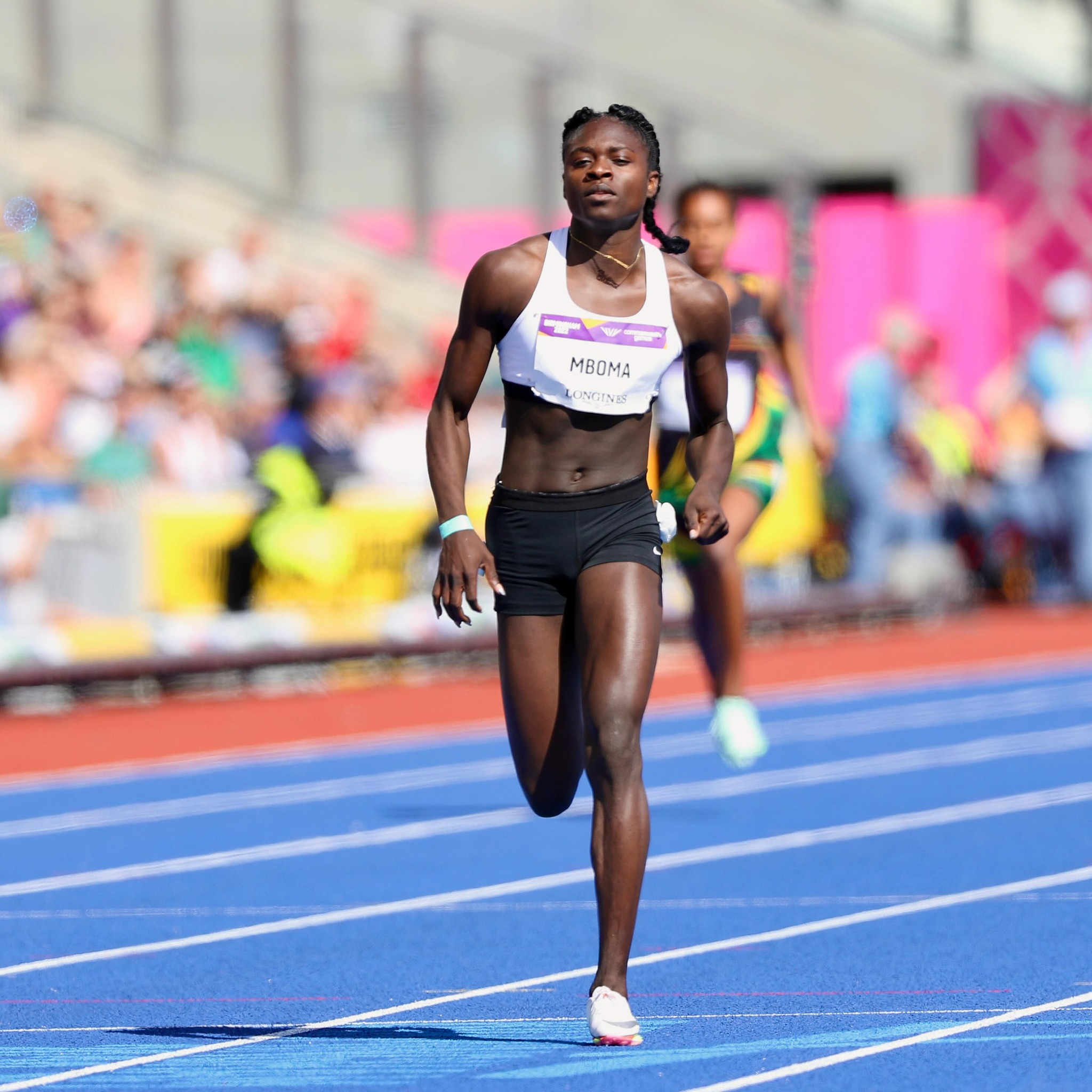
Christine Mboma was born on May 22, 2003, in the small village of Shinyungwe in northern Namibia — a region known more for its farmland than its finish lines. Raised by a single mother in modest conditions, Mboma’s early life was far removed from stadiums or sponsorships. Her childhood was marked by long walks to school, makeshift tracks, and the kind of resourcefulness born of necessity.
Yet from a young age, Christine stood out. Not just for her speed, but for her unshakable determination. She trained barefoot on gravel fields, often timing herself with a phone or using car headlights to practice at dusk. Her talent began turning heads when she started dominating local school meets, running times that seemed almost unbelievable for her age — especially given her lack of formal coaching or proper gear.
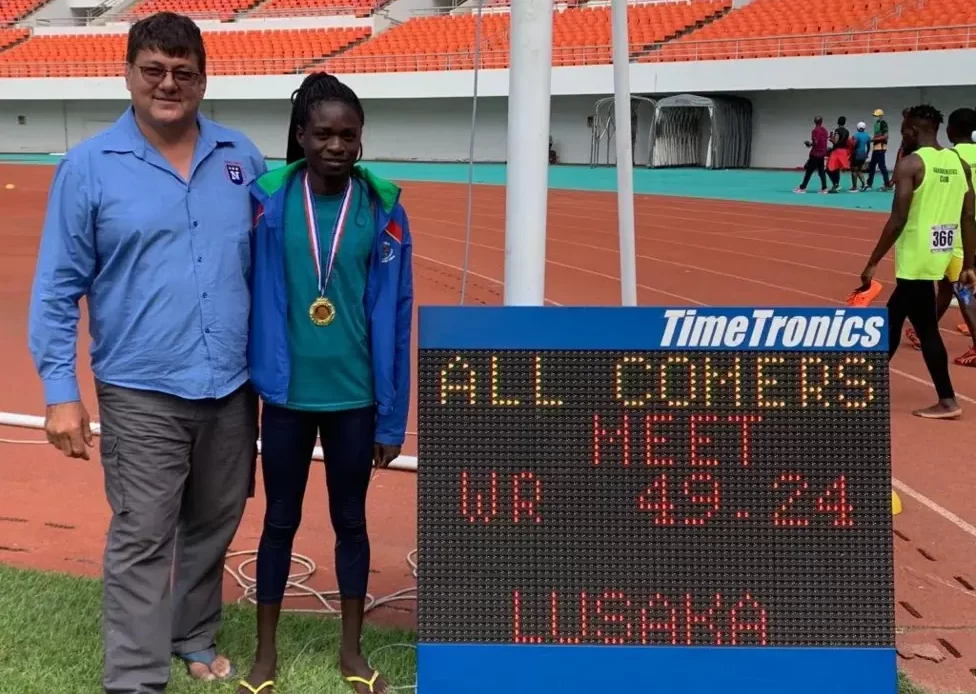
It wasn’t long before Namibia’s athletics community began to take notice. Coach Henk Botha saw in Christine not just raw speed, but something rarer — mental resilience, a hunger to learn, and a natural racing instinct. He took her under his wing, providing her with structured training and guidance, and quickly, her times began to drop. In a country with limited facilities and a history of underrepresentation in global athletics, Mboma became a symbol of possibility — a teenager from a remote village who was rewriting what was possible for Namibian girls.
Read: Oluwatobiloba Oyinlola Creates World’s Smallest GPS Device
The Controversy That Almost Ended Her Career Before It Began
Just as Christine Mboma was beginning to find her stride on the global stage, a storm was brewing — one that had little to do with her training, talent, or timing. In 2021, only months before the Tokyo Olympics, Mboma and fellow Namibian sprinter Beatrice Masilingi were barred from competing in their preferred 400m event due to elevated testosterone levels — a ruling based on World Athletics’ regulations for athletes with Differences of Sexual Development (DSD).
The news was devastating. Mboma had just run a world-leading 48.54 seconds in the 400m — the seventh-fastest time in history at only 18 years old. Yet suddenly, her breakout event was taken off the table. Without warning, she became the subject of headlines not for her skill or story, but for a deeply politicized debate in sports science and gender identity.
Critics questioned the fairness of the ban; supporters of the rule argued it maintained a level playing field. But for Mboma, the controversy wasn’t about politics — it was personal. She had never taken performance-enhancing drugs. She was simply being told she couldn’t run the event she had trained for because of something she was born with.
Instead of retreating, Christine adapted. She and her coach pivoted — fast. They turned to the 200m, an event in which she had little international experience. The odds were stacked against her. She had only a few weeks to train, mentally reset, and master a new strategy
The Olympic Stage: From Underdog to History-Maker
Christine Mboma arrived at the Tokyo 2020 Olympics (held in 2021) not as a favorite — not even close. She was running in the 200 meters, a sprint she had barely competed in at the global level. With only a handful of races under her belt in the new event, Mboma was largely seen as an outsider in a field of seasoned stars.
But anyone who had seen her run knew something electric was about to happen.
In the heats, she stunned the track world with a powerful burst in the final 100 meters, overtaking runners with a stride that seemed to defy logic. She advanced, round after round, gaining momentum and confidence. And then came the final.
Lined up against some of the world’s most celebrated sprinters — including Jamaica’s Elaine Thompson-Herah, the eventual gold medalist — Mboma held her own. When the gun went off, she didn’t explode out of the blocks, but what followed was unforgettable.
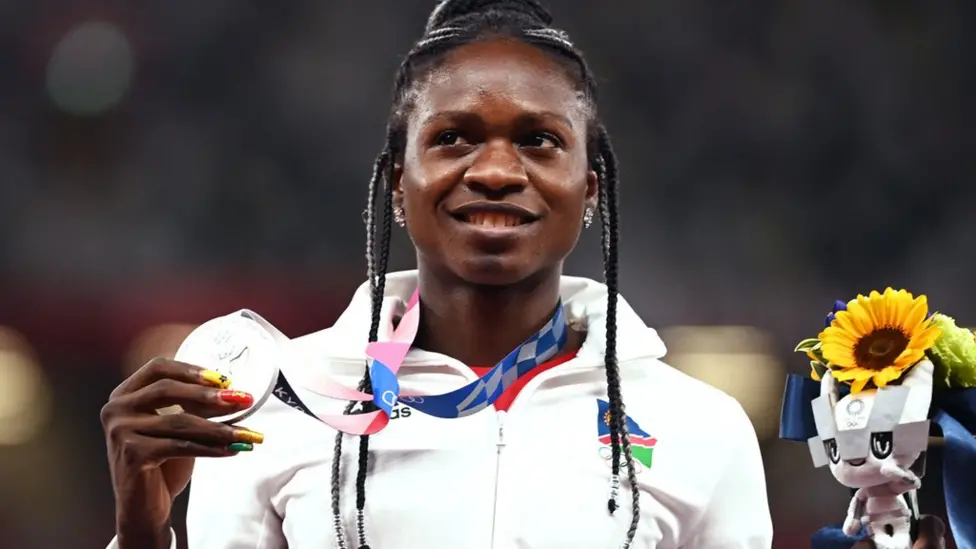
In the last 50 meters, Mboma turned on a second gear. She surged ahead of nearly the entire field, passing medal contenders and finishing second behind Thompson-Herah. At just 18 years old, Christine Mboma won the silver medal with a time of 21.81 seconds — the fastest time ever run by a woman under the age of 20 in the 200m.
That single performance didn’t just earn her a medal — it changed the narrative. No longer was she just a DSD athlete embroiled in a scientific debate. She was now the youngest Olympic medalist from Namibia and the first ever female Olympic medalist for her country.
After Tokyo: Fame, Scrutiny, and Resilience
Winning an Olympic silver medal at 18 catapulted Christine Mboma into global fame. Suddenly, she wasn’t just a rising star — she was the future of sprinting. Brands came calling. Media outlets wanted interviews. Her name trended across continents. In Namibia, she became a national treasure overnight, inspiring a wave of pride and admiration.
But with fame came even more scrutiny. Mboma’s DSD status continued to dominate headlines. While many celebrated her talent, others questioned whether she had an “unfair” advantage. Critics and commentators debated her inclusion in women’s sprinting — not always with compassion or scientific accuracy. Through it all, Mboma remained dignified, choosing to focus on her performance and growth rather than public controversy.
She also had to deal with physical challenges. In 2022, a significant injury — a torn thigh muscle — forced her to withdraw from key competitions, including the World Championships. It was a major setback, especially as expectations had soared since her Olympic success.
But Christine Mboma’s story was never just about one race. It was — and is — about perseverance in the face of pressure, about shattering expectations time and again, and about carving a place in the world on her own terms.
Her comeback was slow, calculated, and intentional. She knew that if Tokyo taught the world anything, it’s that Christine Mboma doesn’t just show up — she stuns.
Read: Before the Queens of Now, There Was Sasha P
More Than a Sprinter
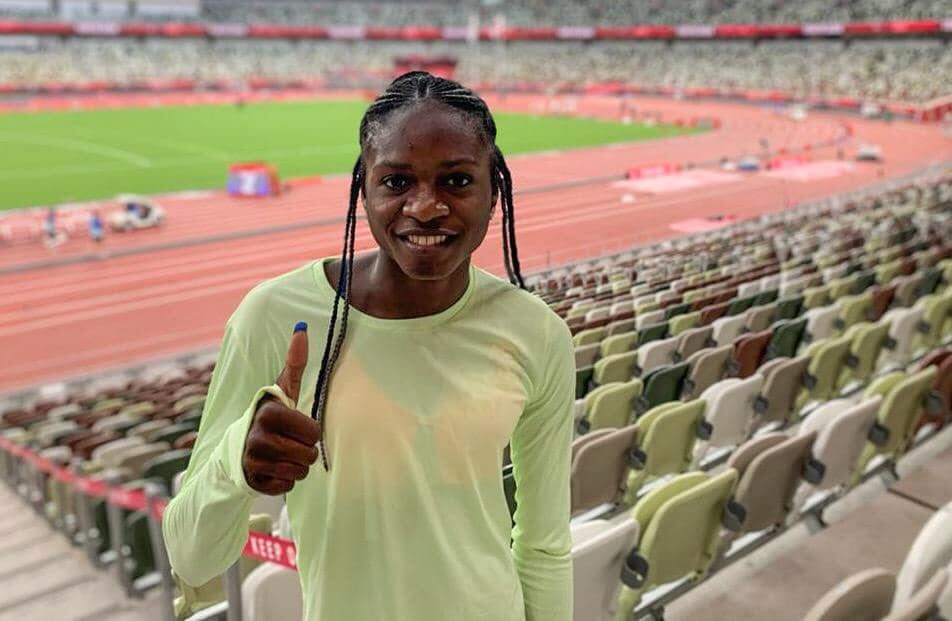
Christine Mboma’s story is far more than a tale of speed — it’s a narrative of resistance, identity, and transformation. In just a few years, she has gone from a rural town in Namibia to the podium of the biggest sporting stage in the world. And she did it without ever compromising who she is.
In a world where athletes with Differences of Sexual Development (DSD) are still fighting for dignity, fairness, and inclusion, Mboma has stood as both symbol and force. Her silver medal wasn’t just for Namibia — it was for every girl who’s been told she doesn’t fit the mold, every athlete forced to justify her body, and every dreamer on the margins.
She may have been thrust into controversy, but Christine has handled it with the poise of a seasoned champion. Her career — whether on or off the track — continues to challenge long-held norms in sports, gender, and biology.
No matter what her future holds, one thing is certain: Christine Mboma is not just running for medals. She’s running for representation, for change, and for every young African who dares to dream differently.