
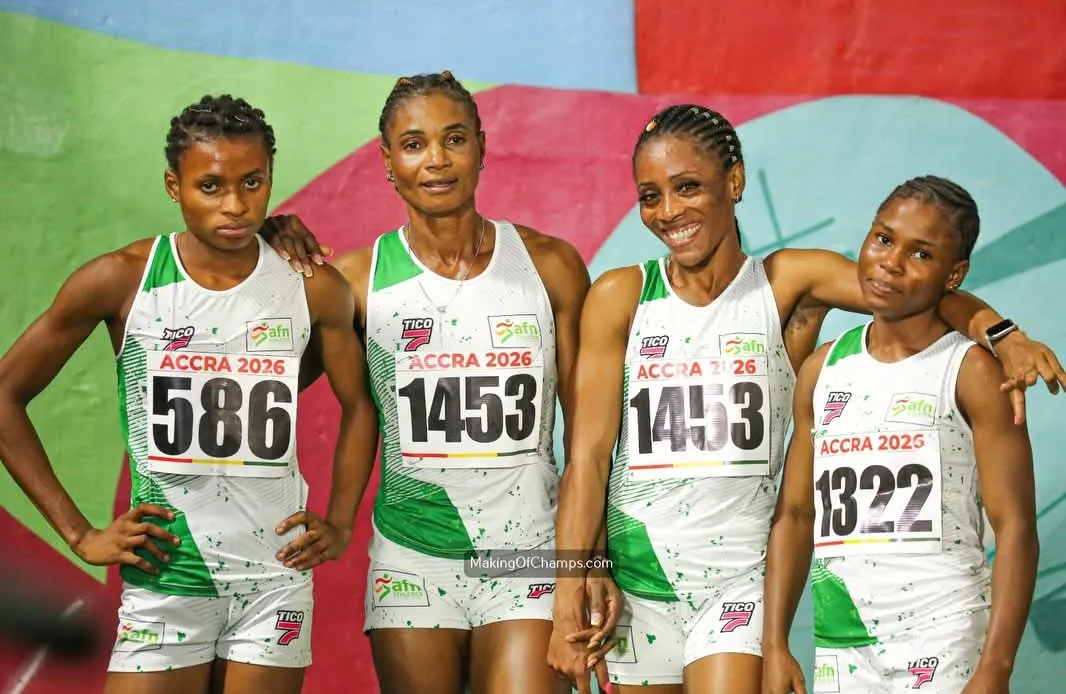
At the 2026 African Athletics Championships in Accra, Nigeria’s experienced stars delivered as expected. Tobi Amusan won gold. The relay teams dominated again. The country finished with an impressive medal haul. But somewhere between the baton exchanges, roaring crowds and medal ceremonies, another story stole attention: Nigerian teenagers competing like seasoned champions on one of Africa’s biggest athletics stages.
For many fans, the biggest surprise was not just that Nigeria won relay gold again. It was discovering that some of the athletes doing it are still secondary school students, teenagers balancing classes, exams and training sessions while racing against Africa’s best sprinters.
Read: Nigeria Extends Dominance With Fourth Straight Women’s Relay Gold
Miracle Ezechukwu Went From JAMB to Championship Gold

One of the standout names from Accra was 17-year-old Miracle Ezechukwu.
The Anambra-born sprinter anchored Nigeria’s women’s 4x100m relay team to gold in a championship-record time of 42.94 seconds alongside Chigozie Rosemary, Jennifer Chukwuka Obi and Rosemary Chukwuma. Liberia took silver while Ghana settled for bronze, but Nigeria’s teenagers had already taken over the spotlight.
What made the story even more remarkable was the timing. Just weeks before competing in Ghana, Miracle had reportedly written her JAMB examination. Imagine stressing over UTME questions one month and then running the final leg of a continental championship relay the next. That is a range very few people can relate to.
But Miracle’s rise did not begin in Accra. In 2025, she won double gold in the 100m and 200m at the African U18 Championships in Abeokuta. Earlier this year, she also became the first Nigerian woman in five years to break the 23-second barrier on home soil in the 200m after clocking 22.91 seconds in Jos.
Now, she is already being tipped as one of the future faces of Nigerian athletics.
Chigozie Rosemary Is Only 16
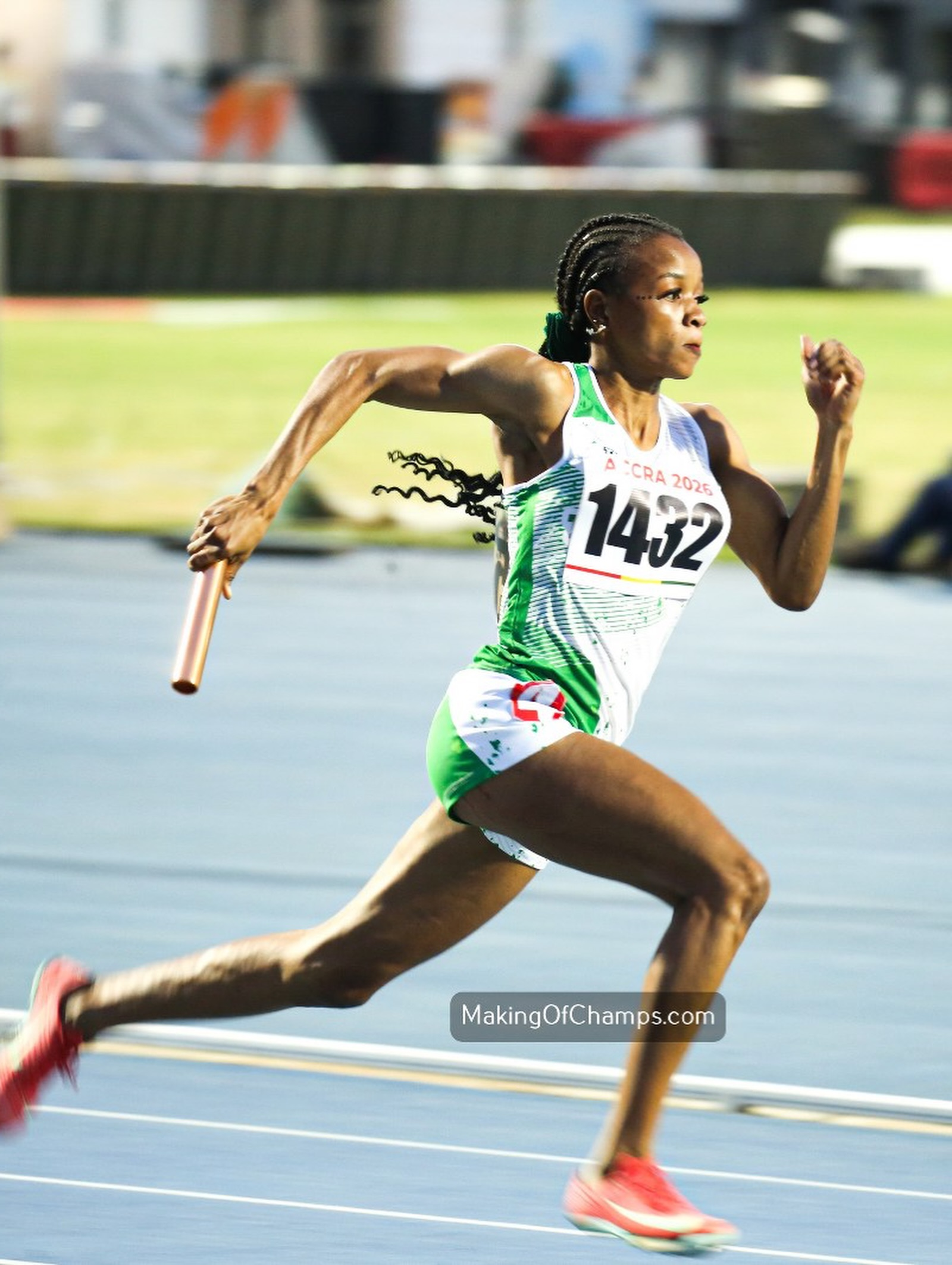
While Miracle grabbed headlines, another teenage sprinter played a huge role in Nigeria’s success. Chigozie Rosemary Nwankwo, just 16 years old and still an SS2 student in Abuja, ran the crucial first leg in Nigeria’s gold medal-winning relay team. Her composure and speed helped to set the tone for the race as Nigeria defended the women’s 4x100m title for the fourth consecutive championships.
For someone who is still balancing athletics with secondary school life, her rise has been incredibly fast.
Chigozie first gained national attention after becoming Nigeria’s fastest girl at the National Youth Games in Asaba. Since then, she has won continental youth titles, qualified for the World Athletics U20 Championships, and represented Nigeria at the World Relays in Botswana.
In Accra, she showed she belongs on the senior stage too.
There is something refreshing about seeing young Nigerian athletes succeed without waiting for “someday”. These teenagers are not being prepared for the future anymore. They are already competing in the present.
Read: Highlights of the African Athletics Championships 2026
Nigeria’s Next Generation Looks Ready
Beyond the medals, the biggest takeaway from Accra may be what these performances say about the future of Nigerian athletics.
For years, conversations around Nigerian sports have focused heavily on poor structures, funding struggles and lost potential. Those issues still exist. But competitions like this also reveal a growing pipeline of young talent pushing through anyway.
Athletes like Miracle Ezechukwu and Chigozie Rosemary are part of a new generation benefiting from youth competitions, scholarships, school sports programmes, and better exposure through events like MTN CHAMPS and the National Youth Games.
And importantly, they are gaining senior experience early.
With established stars like Tobi Amusan and Patience Okon-George still leading the way, Nigeria’s teenagers are learning from athletes who already understand what it takes to compete globally. That combination of youth and experience could become one of the country’s biggest strengths heading into future World Championships and Olympic cycles.
For now, though, Accra belongs partly to the teenagers who reminded everyone that greatness can start very early.
For more African sports stories, rising star spotlights and culture-driven coverage, keep following RefinedNG.