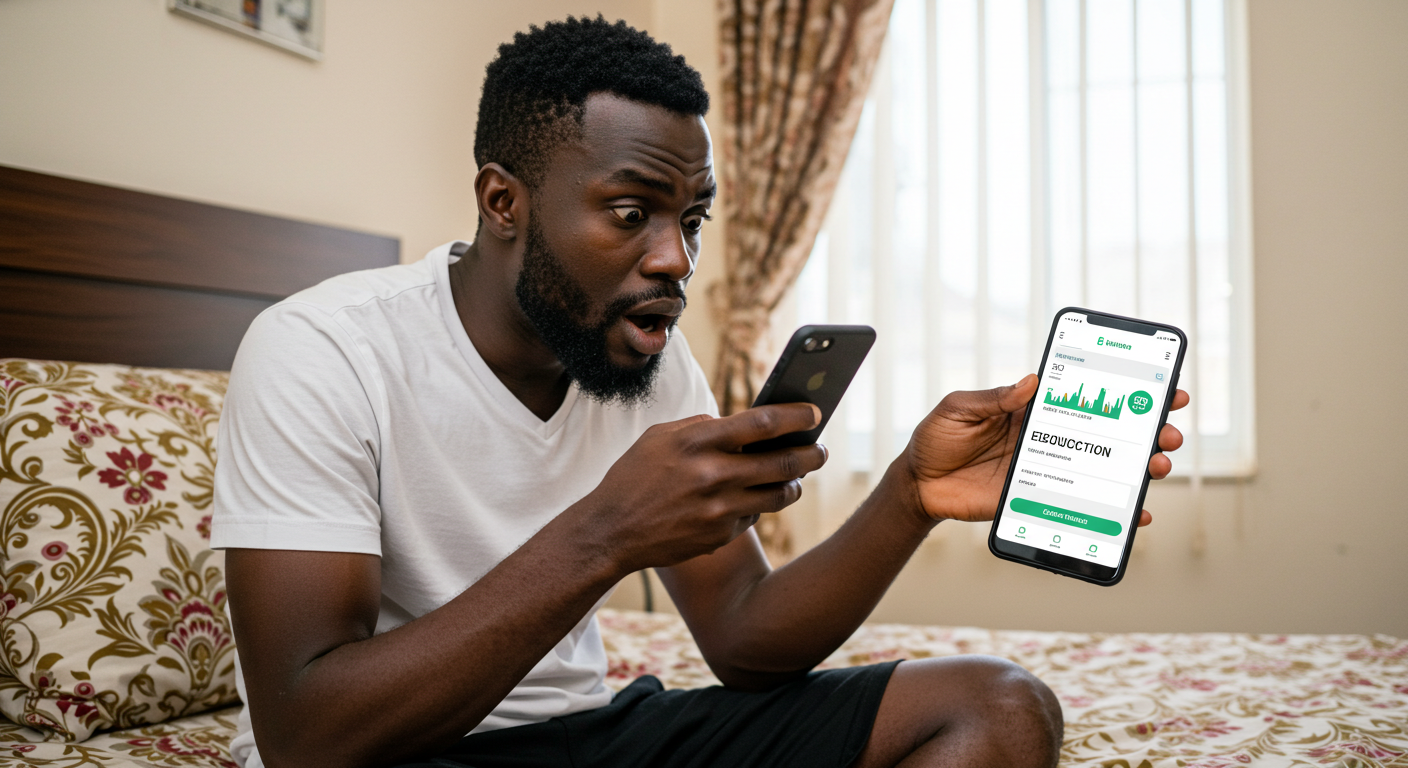
There’s nothing quite like that early-morning fear that hits just before you open your bank app. You already know the balance won’t be friendly, but you still tap in in case a miracle happened overnight. And there it is: that hauntingly low number staring back at you, daring you to ask, “What exactly did I spend money on?”
Sound familiar? You’re not alone. In fact, many young Nigerians live with what could only be described as bank balance anxiety. It’s that rollercoaster feeling between payday and two weeks later when nothing seems to add up—but somehow, everything adds up. One ride on Bolt, three food deliveries, and one “let me just support my friend’s business real quick” later, and you’re already mentally calculating how to survive the next 18 days.
But what if it didn’t have to be this way? What if checking your account wasn’t a trauma response, but a quiet moment of peace? This piece is your no-shame, soft-core intervention—a survival guide for reclaiming control and making your money stop misbehaving.
Why You’re Always Shocked by Your Balance

The truth is, your bank app isn’t out to get you—it’s just reflecting the chaos you let your money spiral into. If it constantly feels like your account balance is ghosting you, it’s probably because you’re spending without a system. We’re talking impulse buys, soft life expenses you didn’t account for, silent app subscriptions, ATM withdrawals with no memory of where the cash went, and of course, the infamous “urgent 2k” requests that somehow add up to a whole week’s budget.
There’s also emotional spending—those moments when you shop to feel better, reward yourself for a stressful day, or order food because adulting feels hard. These actions feel small in the moment, but over time they eat away at your finances, leaving you wondering how ₦100k became ₦12.37 in just one week.
And let’s not forget the “little things” that quietly rob you: multiple streaming platforms you barely use, delivery fees that rival the cost of the food, or subscriptions you didn’t even realize had renewed. The money didn’t vanish—it was just unmonitored. The good news? You don’t need to earn more to fix this. You just need to start paying attention.
Read: Are You Financially Toxic? Let’s Talk Habits That Keep You Broke
Track First, Budget After

Here’s the hard truth: you can’t control what you don’t understand. Before you even start thinking about budgeting, the first step is to figure out where your money is actually going. Most of us think we know, until we sit down and realize we’ve been leaking cash like a bucket with a hundred holes.
Forget the complex spreadsheets and finance jargon for now. Just go back and look through your last 30 days. Check your bank app, mobile wallet, ATM withdrawals, card transactions—everything. Write down every single expense. Yes, even that ₦500 meat pie and the random ₦1,200 transfer to your cousin.
You’ll likely be shocked by the patterns. Maybe you’ve been spending ₦18k monthly on food deliveries alone, or ₦10k on subscriptions you barely use. Maybe you’re tapping into your savings every other week without even realizing it. Tracking isn’t about judgment—it’s about awareness. And once you know, you can fix it.
There are simple tools to help you track. You can use a notes app, Google Sheets, or budgeting apps like Spendee, Mint, or even PiggyVest’s expense tracker. The point is to start observing. Tracking is the mirror—budgeting is the game plan. And you can’t build a plan if you’re blind to the problem.
Build a Bank-App-Proof Budget

Now that you’ve faced the reality of where your money is going, it’s time to protect yourself from future heartbreak. A bank-app-proof budget isn’t just a rigid list of “don’ts”—it’s a flexible system designed to reflect your actual lifestyle while helping you avoid financial shock.
Start by setting up spending categories that match your reality. This isn’t the time for fantasy budgeting. If you know you spend money on weekend hangouts, Instagram thrift hauls, and data every other day, don’t pretend you won’t. Instead, plan for them. Create realistic categories: food, transport, airtime/data, subscriptions, enjoyment, and savings. You don’t need twenty line items. Keep it clean and honest.
Next, assign limits to each category based on your income. If you earn ₦150k, maybe ₦25k goes to food, ₦10k to transport, ₦10k to data, ₦15k for soft life, and ₦30k to savings. Whatever it is, set the boundaries. Then, automate where you can. Move your savings immediately after you’re paid. Consider using a second bank account or a digital wallet to separate spending money from bills and savings.
Set up transaction alerts too—yes, they’re annoying, but they’ll keep you in check. And if you’re serious, enable low balance notifications. Nothing humbles faster than that “₦1,000 remaining” alert right before you order sushi.
Budgeting isn’t about restriction. It’s about clarity. Knowing your limits allows you to spend freely—without waking up to chaos in your bank app.
Make Small Rules That Save Big
Sometimes, it’s not the big budget moves but the tiny habits that protect your finances from chaos. You don’t need a 10-page financial plan to avoid overdrafts and end-of-the-month anxiety. A few simple personal rules can change your entire money experience.
Try setting a “no spending before noon” rule. You’d be shocked how much money leaves your account between 8 a.m. and 11 a.m.—random breakfast cravings, unnecessary data top-ups, impulsive online shopping. Delaying spending forces you to be intentional. If you still want it by 12, maybe it’s worth it. If not, you’ve saved money without effort.
Another useful one is to cap your weekly spending on categories that drain you, like food delivery. Maybe it’s ₦5k a week, and once that’s done, it’s Indomie and vibes till Sunday. These rules help you stay disciplined without feeling deprived.
Don’t forget to unsubscribe from temptation. Marketing emails and app notifications are designed to get you to spend. Turn them off. Protect your peace.
Also, adopt the habit of paying yourself first. Once your salary drops, transfer your savings—before touching anything else. Treat savings like a bill. When it’s out of sight, it’s out of reach, and that’s a good thing.
These little boundaries create room for consistency. And over time, consistency compounds into stability.
Read: You’re Not Broke, You’re Just Undisciplined”: A Soft Guide to Budgeting
You Deserve Peace, Not Panic

The goal isn’t to become obsessed over every naira or live like you’re punishing yourself. The goal is to check your bank app in the morning and feel peace, not panic. That kind of peace doesn’t come from earning more (though that helps). It comes from having a plan, building better habits, and refusing to let your money run wild without supervision.
There’s a version of you that budgets, tracks, and enjoys life, without surprise overdrafts or mystery deductions. It doesn’t require perfection. It just takes consistency, self-awareness, and a little discipline. You can still enjoy your shawarma, movie nights, and impulsive date plans. The difference is, you’ll be doing it intentionally—and without side-eyeing your account the next morning.
The truth is, financial anxiety isn’t a rite of passage. It’s a sign that something needs to shift. So if you’re tired of those heart-dropping bank app moments, maybe it’s time to shift how you manage your money. Start with one change. Then stack the next.
You deserve money peace. You deserve control. And yes, you deserve to open your bank app without flinching.