
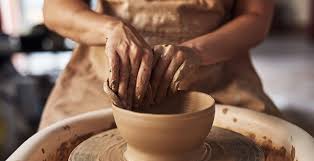
Pottery in Nigeria is more than just clay shaped into form; it is a vessel of history, culture, and identity. From traditional water pots in rural communities to contemporary ceramic art showcased on global platforms, pottery carries the stories of generations, reflecting both heritage and innovation. Today, a new wave of Nigerian potters is redefining the ancient craft, ensuring it remains a living connection between the past and the present. These artists are preserving cultural memory while reimagining clay as a medium of modern expression.
Olugbade Adekemi
Olugbade Adekemi is a Nigerian potter and the founder of Cherry Clay Art, a studio dedicated to creating functional and decorative ceramics. Her pieces are an intersection of tradition and contemporary design, drawing inspiration from African heritage while catering to modern lifestyles. From kitchenware to artistic home décor, her work reflects a philosophy of giving clay a deep African sense of belonging. She has consistently emphasized the role of pottery not just as a craft, but as a cultural language that deserves preservation.
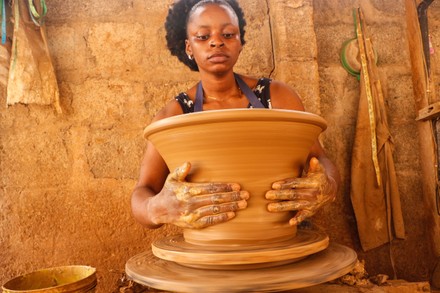
Beyond her art, Adekemi invests in the future by training young potters, passing down skills and knowledge to ensure that pottery thrives in Nigeria’s next generation. “My dream is to bring to life the deep African sense of belonging through pottery, with a touch of exquisite modernity,” she says, describing her vision of blending timeless heritage with contemporary elegance.
Idris Olabode
Idris Olabode, founder of Clay of Lagos, takes a more spiritual and introspective approach to pottery. His wheel-thrown ceramics are crafted not just as physical vessels, but as spaces for emotional awareness and mindfulness.
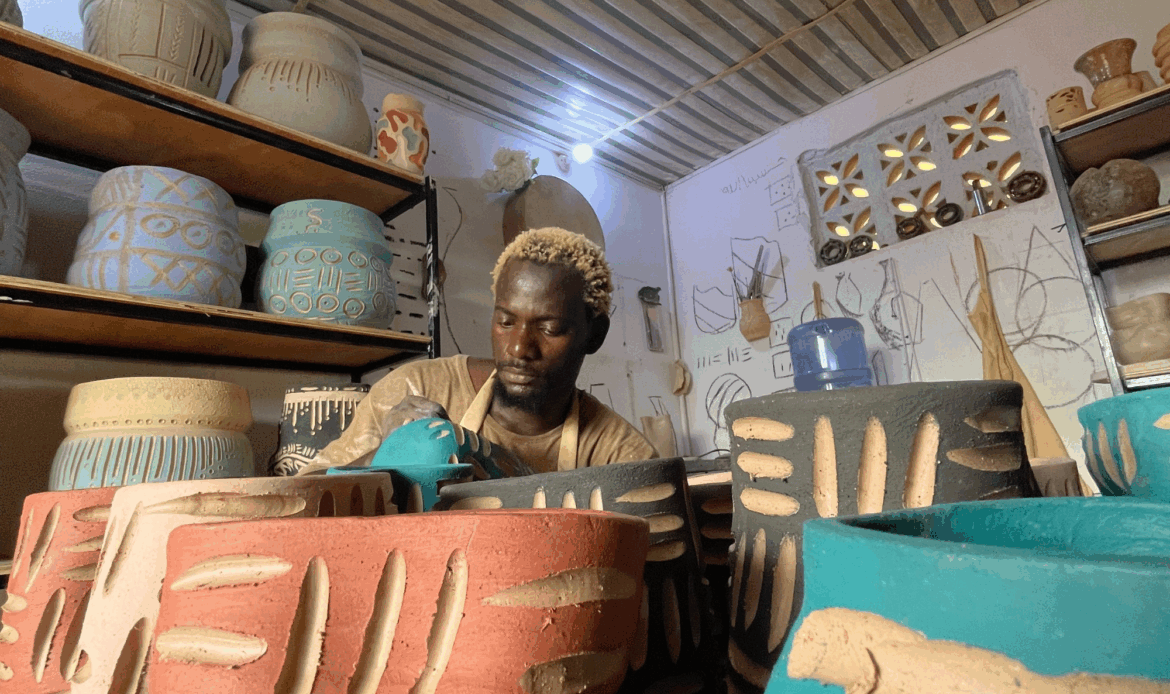
By merging Yoruba cultural motifs with minimalist aesthetics, Olabode creates pieces that invite reflection and evoke healing. His art transforms clay into a medium of storytelling, where silence, memory, and emotion find a tangible form. He believes that pottery embodies unspoken stories, describing his work as a channel for cultural expression and personal growth. “Clay expresses what words cannot, it holds space for the stories we carry but often do not speak,” he reflects.
Through this philosophy, Olabode’s studio practice bridges tradition with wellness, showing how Nigerian pottery can meet both cultural and contemporary human needs.
Ranti Bam
Ranti Bam is one of Nigeria’s most celebrated ceramic artists, known for her bold, sculptural pieces that have earned international recognition.
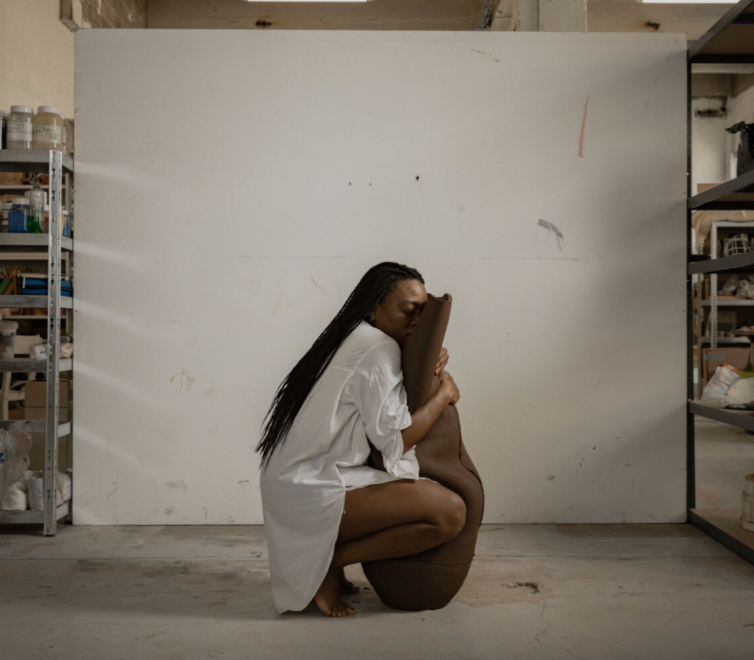
Her works have been exhibited in prestigious galleries and art fairs across Europe, the United States, and Africa, placing Nigerian ceramics firmly on the global stage. Bam’s practice is rooted in an exploration of clay as both material and metaphor, weaving African storytelling and philosophy into striking contemporary forms.
Her creative journey was ignited when she first encountered contemporary African art, an experience she describes as “an opening of my third eye.” This awakening continues to shape her art, as she uses ceramics to question identity, transformation, and the dialogue between tradition and modernity.
Working from international studios, Bam has become a voice for African ceramics in global conversations, proving that Nigerian pottery is not confined to local heritage but is central to the evolving language of world art.
Read more:5 Things You Didn’t Know About Pottery in Nigeria
Together, these artists embody the resilience and adaptability of Nigerian pottery. Their works demonstrate that clay is more than craft; it is a cultural archive, a healing practice, and a bridge to global recognition. From the functional to the sculptural, from the personal to the communal, Nigerian potters are ensuring that this ancient art remains alive, relevant, and deeply connected to the stories of both past and present.